USA: Survival of the fittest
|
|
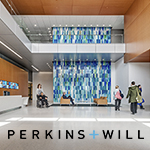
Natural light is maximised in the Community Hospital North, which is designed by RTKL
|
Good design is not a luxury. But as North America faces up to its toughest prospects for years, many healthcare infrastructure projects are either being shelved or cut back. Veronica Simpson reports on how a strong design ethos can make the difference when times get tough.
The North American healthcare sector is reeling from the current financial meltdown – hit harder than most, given the exposure of its massive private healthcare system to stock market crashes. Modern Healthcare magazine recently ran a front cover story detailing the scale of US healthcare projects that have been cancelled or put on hold with the headline: “It’s green. It’s digital. It’s patient-centered. It’s not going to open. Not for a while, anyway.”
Late last year, The American Healthcare Association (AHA) surveyed 736 of its member hospitals nationwide, and 56% of them were reconsidering or postponing capital expenditures, whether investment in equipment, new building or refurbishment. While budgets are being slashed or projects cancelled, it seems unlikely that the kind of luxurious, spa-oriented facilities that are peppering the US landscape will proliferate further.
Though women are generally acknowledged as the decision-makers in choosing family healthcare facilities, the presence or absence of scatter cushions or a flickering fireplace in the lounge is unlikely to count more than access to the top physicians in their field, especially when it comes at a premium.
Positive pressure
The growing transparency of the system will add more pressure on healthcare facilities to focus all their attention on positive surgical outcomes rather than architectural statements. MediCare, the US’s largest health insurer, is apparently now refusing to pay for bungled or mismanaged operations, which means the country’s top surgeons and consultant will be in ever greater demand. Their success rates are published in league tables online and in medical magazines. RTKL president Brad Barker says: “The industry is becoming more transparent, and the physician is the number one driver of where care is chosen.”
However, the new generation of hospitals which put patient and staff wellbeing, disease-management and operational efficiencies at the centre of their design ethos are reaping rewards in terms of staff performance, patient recovery times and satisfaction.
Good design is not a luxury. It is a vital element that none should aim to jettison in the name of shareholder appeasement, cost savings or belt-tightening. As Rich Dallam, principal at NBBJ, rightly points out: “Great design doesn’t mean more money or a more generous budget. You can get an incredibly responsive environment for the delivery of patient care and staff needs, and you don’t have to spend a dime more than you normally would.”
|
|
Case study: Heart Hospital Baylor Plano
RTKL’s new Heart Hospital Baylor Plano in Dallas has a white limestone and glass facade, plus valet parking and interiors which, in their sophisticated colourings, subtle lighting and feature materials, wouldn’t be out of place in a Ritz Carlton Hotel Group. But this $106m, 197,000 sq ft cardiac center in Plano, Texas, achieves, through its ‘bow-tie’ layout, efficiencies both in infection-control and patient monitoring, with different services (emergency and imaging; surgery; electrophysiology and cardiac catheterization labs) accommodated on their own separate floor, and nurse stations situated close to the central lift shafts, with sweeping views across the patient rooms.
|
|
Natural assets
NBBJ’s work at Southwest Washington Medical Center illustrates this, efficiently creating a new, 307,000 sq ft patient tower that offers state of the art medical care with an uplifting aesthetic. It maximises its natural assets – large patient room windows provide views onto the nearby mountains plus masses of natural light – enhances energy performance and knits the community together by providing diverse social spaces for patients, family and staff to rest, consult and recuperate.
Shortly after the facility opened, in early 2007, Southwest President and CEO Joseph Kortum said: “The idea that a building can foster a culture change or an image change or a community’s reaction to an institution, I think, is valid, and that’s clearly happened with this building. The way the community talks about the hospital is noticeably different.”
This promotion of the social and psychological elements of healing spaces is one of the US’s strongest contributions to global healthcare architecture. The in-depth engagement early on in the design process with all healthcare users – including patient families – has been pioneered by charitable foundation Planetree, which was founded in 1978 to demystify and humanise the patient experience.
Many US hospitals are now signed up as members of this not for profit organisation, which means that any building developments don’t even get to the drawing board before the architecture and design teams have consulted thoroughly with staff, managers, patients, their families and the local community.
|
| The Highline Medical Centre in Washington |
Minimum standards
When Northwest Architectural Company (NAC) completed the 97,000 sq ft Cedar Wing of The Highline Medical Center (HMC) in Burien, Washington, it was the first time it had encountered the Planetree guidelines. Some of the resulting design details – adequate spaces for families outside and inside patient rooms, respite opportunities outside the patient rooms and ample storage space so that equipment doesn’t clutter up and institutionalise the spaces – were innovative then, in 1998, but are commonplace now.
Nurse stations were positioned to be closer to patients, though still allowing them privacy, and utilised domestic scale chairs and tables to encourage informal conferences between staff, patients and care partners. And a linking element, between new and existing buildings was transformed into a two-storey gallery, with water features, public art works, access to a communal garden, and restaurant and relaxation facilities.
The degree to which the facility’s design responded to patient, staff and family needs has clearly paid off long term. Richard Salogga, principal and director of healthcare design at NAC, says: “As measures of the project’s success, HCH doubled the number of infant deliveries in three years, has continued to grow its market share for other services, and has very low staff turnover. But most important to me, as I continue to work with HCH, I am often told by the staff who participated in the design process how pleased they are with the product of our mutual efforts.”
The consultation process itself is part of the design outcome – engaging the goodwill and understanding of the healthcare community, beyond the considerations of mere planning and aesthetics. And this seems to be proved time and time again. Zimmer Gunsul Frasca has extensive experience with children’s hospitals (including the Childrens Hospital of Philadelphia and the award-winning Doernbecher Children’s Hospital), but they still went the extra mile recently when working on the Denver Children’s Hospital.
Seven members of the ZGF team spent two intense weeks shadowing and interviewing families, patients and more than 250 hospital staff from 27 different departments (for full report, see July 2008 issue of WHD). Says Sharron van der Meulen, the principal interior designer for the project: “This shadowing process not only provided an objective, real-time look at conditions about which users may not have been aware, it also instilled the design team with a sense of empathy that carried forward into the design.”
|
|
Case study:
Community Hospital North, Indianapolis
When this 400,000 sq ft six-story patient tower opened at Community Hospital North, Indianapolis, the overall campus almost doubled in size. It is part of a three-phase, $170m expansion, creating an additional one million-square-foot that will truly transform a community hospital into a full-service urban medical complex. Its core aim is to be a people friendly environment specifically created to reduce stress and confusion. RTKL’s six-storey patient tower has been added in front of the existing hospital. RTKL’s Women’s and Children’s Patient tower houses 60 LDRP rooms. Openness, simplicity of orientation, safety and comfort are key.
|
|
Digital futures
In depth consultations also provide architects with an opportunity to identify key issues for future consideration. One of these is the push towards a digital healthcare environment. As yet, the massive investment in technology and training is deterrent enough for most healthcare systems, but there is a growing community of “paper-lite” facilities, whose advantages are as much social as technical.
With its glowing limestone and glass facade, valet parking and massive patient rooms, RTKL’s Heart Hospital Baylor Plano, in Texas, looks every inch the state of the art cardiac facility. This $106-million, 197,000 sq ft hospital is one of the latest generation of paper-lite hospitals, with information technology, medical equipment and building systems all integrated.
There are systems for digital picture archiving and communications as well as automated medication dispensing systems. Thanks to the use of concierge-type digital technology, monitoring the whereabouts of all patients and staff, patients can be shown straight to their rooms on arrival, and it’s here that they are prepared for procedures and to which they return immediately after surgery. This process helps alleviate the stress usually associated with hospital visits, of being bounced around an endless series of waiting rooms, and can save patients up to half a day of in-hospital recovery time.
Technology is massively expensive, and this issue, plus the difficulty in keeping up with ever changing trends, might push the digitalisation of US hospitals onto the back burner for now. Far more pressing is the need to accommodate greener and more sustainable practices in a world of rapidly dwindling fuel resources.
|
|
Case study: Sustainability
RTKL achieved LEEDS silver rating for this freestanding outpatient diagnostic, therapy and medical office building surrounded by nature. The environmentally friendly design not only complements the natural beauty of the site, it enhances the facility’s healing environment and preserves the natural habitat of the Florida Scrub Jay. The building faces north and east to protect the main entry’s facade, with a glass facade that helps visitors and patients remain connected visually with nature. The remainder of the building also allows for abundant natural light and good views, yet still creates an energy-efficient envelope. Harsh light and heat gain are shielded for energy efficiency. Existing vegetation was preserved to enhance the landscape while new plants were added to complement the natural ecology. The landscape is irrigated with rainwater collected and held in several retention ponds. Interior colours and finishes also offer a connection to nature by echoing those of the outdoor environment. In addition, all finishes are high-performance and cause minimal environmental impact. Preference was given to materials that were manufactured regionally, contain recycled content, improve indoor air quality, and require minimal maintenance. Additional sustainable aspects include water efficient fixtures; motion and timed lighting controls; daylighting, including windows in the MRI room; and bike racks, showers, and lockers to encourage cycling to work.
Project credits: Parrish Medical Center, Port St John, Florida
Architecture, interior design and medical equipment planning: RTKL
Opened: 2007
Area: 72,235 sq ft
Construction cost: $30m
Contractor: Skanska
|
|
The future is green
The biggest battle on the green front is correcting the widespread misperception that it’s necessarily expensive. NBBJ’s Rich Dallam says: “Designing facilities for maximum daylight doesn’t cost you any more. It saves money. It’s not design. You could look at 100 site plans for hospitals and how many of them would be oriented to the sun? Maybe one? Good site planning doesn’t cost you any more money, and it’s a simple thing to do.
“There are 100 things you can do to make buildings more sustainable. And the client is interested. They want to understand the costs. And if there are things they can do at a later date, you design them into the plans, and they can defer it. There are ways of phasing things in.”
|
|
Going green: St Mary's Duluth Clinic, designed by HKS
|
US interest has been stimulated by the rocketing fuel prices last summer, says Roy Gunsolus, senior VP and principal and director of sustainability for healthcare at HKS’ Dallas HQ. Some of HKS’ clients have seized the green agenda and run with it. St Mary’s Clinic First Street Building in Duluth, Minnesota, which opened in 2006, was HKS’ first US healthcare project to achieve Gold LEEDS certification – and one of the first nationally to achieve this standard.
“The people there were already doing a lot of green things, in terms of energy efficiency, and use of materials. They were further ahead than we were, in 2002, when we started that project,” says Gunsolus. The focus on green issues included harnessing the calming visual power of nature: the 225,000 sq ft facility, which opened in late 2006, takes full advantage of its location, next to Lake Superior, with infusion rooms, waiting rooms and circulation spaces oriented and animated by the dramatic lake views.
Lancaster General Hospital in Pennsylvania is a new HKS project that has specifically asked them for green and sustainable solutions. Says Gunsolus: “It’s Amish country, and the community is very interested in preserving the character of the countryside and the community, and they’re looking at investing in cutting edge concepts such as geothermal heating and chilled beams.”
|
|
Case study: The social element of healing
This new, eight-storey building comprises a dedicated Heart and Vascular Center, 15 state-of-the-art surgery suites, six interventional suites and 144 private patient rooms. All patient rooms are single-occupancy with full-height windows and views of the surrounding mountains, Glazed sliding patient room doors also allow safer manoeuvrability of patients at the same time as helping to bring daylight into the corridors. Hallways are angled, to help reduce direct noise pollution, and sound-absorbing materials deployed throughout. With the advent of private patient rooms, the social dimension of healing is diminished. To compensate, “perches” were placed outside each patient room, providing families or friends with a space to wait while patients are examined. Employing 3,300 full- and part-time employees, an emphasis on employee wellness is evident: through 60,000 sq ft of glass, the hospital is flooded with natural light. Standardised, same-handed patient, operative and preoperative rooms enable quick-and-easy orientation for staff and patients alike—increasing patient safety through error reduction and increased operational efficiency. A staff-only “secret garden” provides an outdoor place of respite. As the first piece of this complete campus renewal, the design transformed an asphalt-covered parking lot into three city blocks of lush healing gardens and landscaped community pathway, with a serene creek and waterfall, walking paths through an open and inviting landscape design, and the addition of 267 new trees and more than 3,000 new shrubs and plants.
Project credits: Southwest Washington Medical Center
Architecture / interior design: NBBJ
Completion date: December 2007
Area: 307,000 sq ft
|
|
Resourcefulness
In straitened times, resourcefulness pays. And recent years have seen great advances in materials and techniques that can mimic more luxurious finishes to enhance the feeling of comfort and restfulness without huge furniture, fixtures and equipment budgets.
Pointing to its recent work at Community Hospital North, Indiannapolis, RTKL’s Brad Barker says: “We used stone effect fireplaces that actually use concrete made to look like stone. It’s the same price as brick. For flooring, we are returning to a lot of old materials, like terrazzo. It’s very durable. These days there are synthetic wood floors where you can hardly tell the difference from real wood.”
There are systems for digital picture archiving and communications as well as automated medication dispensing systems. Thanks to the use of concierge-type digital technology, monitoring the whereabouts of all patients and staff, patients can be shown straight to their rooms on arrival, and it’s here that they are prepared for procedures and to which they return immediately after surgery. This process helps alleviate the stress usually associated with hospital visits, of being bounced around an endless series of waiting rooms, and can save patients up to half a day of in-hospital recovery time.
Technology is massively expensive, and this issue, plus the difficulty in keeping up with ever changing trends, might push the digitalisation of US hospitals onto the back burner for now. Far more pressing is the need to accommodate greener and more sustainable practices in a world of rapidly dwindling fuel resources.
Veronica Simpson is an architectural write and journalist
|
|
Case study: Quality of interiors
The Peacehealth Medical Centre is said to offer a welcoming atmosphere. Its NorthWestern Lodge feel helps to sustain a relaxing ambience in both the public areas and the patient rooms. A bell tower and lone Douglas Fir serve as beacons that are immediately recognisable from the road. Architects Anshen + Allen drew inspiration from resort design, emphasising arrival and reception, patient and family spaces, and connection to the natural environment through views onto the stunning Pacific Northwest scenery offered by the 181-acre site, framed by the McKenzie River, meadows and groves of Douglas Fir. The heart of the hospital is a two storey atrium with a fireplace at its centre, serving as a congregation and connection point. A grand staircase, intricately constructed iron and brass railings and hardwood floors enhance the resort feel. Trees that were displaced during construction were milled and used in the dramatic atrium ceiling. An extensive art programme saw local and national artists contribute their work to the healing experience, with hand carved glass panels in the chapel, and bas-relief limestone carvings on the exterior. The aim, in time, is to knit the facility into a strong local community with health and wellness integrated into the community culture. There are 3.5 miles of walking/running trails that traverse the campus, plus parcels of land reserved for housing, hotels, restaurants, conference centre, assisted living, and medical retail space.
Project credits: ‘Peacehealth’ Sacred Heart Medical Center, Riverbend, Springfield, Oregon
Architects: Anshen + Allen
Area: 1.2 million sq ft
Cost: $350m
Completion date: August 2008
|
|
|
|
Case study: The Centre of Hope, Oregon
The Center of Hope is a new, 11-storey cancer care facility in Oregon, US, which unites into a single building a series of buildings previously constituting all of Providence Cancer Center’s (PCC) diagnostic and treatment facilities. The architects, Zimmer Gunsul Frasca, have translated PCC’s philosophy of “a connected experience of care”, into a facility where patients can meet with researchers, physicians and specialists in all aspects of cancer treatment and rehabilitation, but also with spiritual advisors, counsellors, social workers, and complementary therapy specialists. Completed in February 2008, the $204m faclity accommodates 240 beds, 21 operating rooms, a patient spa, personalised chemotherapy suites, as well as the Northwest’s first Perfexion Gamma Knife, intensity modulated radiation therapy, High Dose Rate (HDR) brachytherapy and image guided radiation therapy. The L-shaped tower plan orients the major building facades to the east and north to capture the best views of nearby mountains. It is flooded with natural light, thanks to its glazed envelope. Views onto the outdoors have been provided in lower level diagnostic and treatment areas with clerestory windows, while a skylit atrium connects to the lower level around which radiation therapy waiting and examination spaces are situated. Glazing around public research and waiting rooms, as well as nurse stations, also help with wayfinding. Calming, neutral tones with extensive use of wood or wood-effect materials enhances the interiors, which are carpeted in natural fibers, on non-clinical treatment/research levels. A diverse series of meditation rooms, private consultation rooms and various secluded outdoor spaces also offer opportunities for peaceful reflection.
|
|
|

1.1.jpg)


|