Turn On, Turn Off
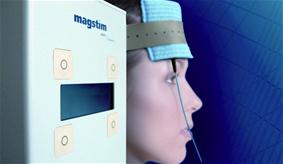 Magnetic stimulation is a non-invasive and painless method of exciting neurons using strong, time varying magnetic fields generated by a stimulating coil held close to the intended site of stimulation. Magnetic stimulation is a non-invasive and painless method of exciting neurons using strong, time varying magnetic fields generated by a stimulating coil held close to the intended site of stimulation.
Used for research, diagnosis, prognosis and therapy in nervous and psychiatric disorders, it is able to stimulate the human cortex, spinal roots and peripheral nerves.
Transcranial Direct Current Stimulation (tDCS) involves applying weak electrical currents to the head, to generate an electromagnetic field that modulates the activity of brain neurons. tDCS is known to selectively modulate neuronal excitability and can be used alongside Transcranial Magnetic Stimulation (TMS), fMRI or centrally acting drugs.
Emerging as a major research tool in its own right, tDCS is complementary to conventional TMS, and is being investigated as a non-invasive treatment for a variety of conditions such as stroke recovery, depression and migraine. In trials, tDCS has shown promising indications of a positive role for non-invasive direct current stimulation in stroke rehabilitation1.
TMS and tDCS could enable more targeted neuropharmacology delivery through greater understanding of brain processes. Using TMS as a research tool, brain activity can be triggered with minimal discomfort while the circuitry and connections of the brain can be studied using MRI. By stimulating and ‘turning off’ targeted areas of the brain, researchers can identify which regions are responsible for specific tasks.
Based in Wales, The Magstim Company has pioneered the development of new magnetic stimulation technologies, providing neuroscientists with the means to work with the human brain in awake subjects by manufacturing and supplying state-of-the-art clinical and research instruments in the fields of neurology, neurophysiology, psychiatry and rehabilitation.
www.magstim.com
References
1. Fregni F., et al (2005) Transcranial direct current stimulation of the unaffected hemisphere in stroke patients. Neuroreport 16(14):1551-1555; 28 September 2005.
|

1.1.jpg)







|