The Challenge Of Complexity
 |
|
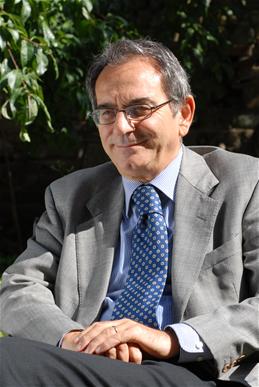
Prof Romano del Nord
|
 |
Dr John Zeisel
|
Human health is significantly related to the designed environment, say Dr John Zeisel and Prof Romano del Nord. The research activities promoted by the International Academy for Design & Health are founded on this assumption. Our mission is to spread this awareness and promote health through well designed environments.
As members of the Design & Health Scientific Committee, we want to emphasize the importance of integrating scientific research evidence in the design process, both in pre-design programming and in post-occupancy evaluation.
The integration of the disciplines of architecture, design, psychology, sociology, health sciences and economics provide global opportunities for researcher and practitioner exchange. We are committed to upholding high standards in this area to promote the practical as well as the theoretical importance of design in health promotion and innovation.
A healthy discipline and healing environments continually reinvent themselves. Where does such innovation originate? What tools generate transformation? Complexity theorists suggest that innovation emerges from an unfolding process of unpredictable ‘jumps’. Process theorists argue that such innovative ‘jumps’ emerge from the confrontation of imagination and empirical evidence through an ongoing iterative design spiral.
New design principles are needed to respond to a new world of rapid change. There is little doubt, however, that the machine-aesthetic and the homme-machine are the remnants of a dated view of architecture and design waiting to be updated by contemporary research.
While design innovation manifests itself in non-linear dynamics, so does research. Research acts as a seismograph of the state of the art and a reflector of historical change. Scientific research is an indispensable component in an historic continuity allowing innovation to explode into unexpected directions.
The history of healthcare architecture, for example, is characterised by long uneventful periods followed by great transformation. Today’s cultural upheaval is stimulating and opening new grounds for innovation, heralding the much anticipated Third Millennium ‘jump’.
Traditional healthcare culture addresses the ‘illness’, not the ‘ill’, and is based on unconditioned faith in the ‘machine’. This approach has generated the metaphor of healthcare settings as machines for healing and determined the architectural debate since the post war years. Today’s scientific research aims to change these principles, starting with adopting the base belief in ‘human-centred’ environments.
In a rapidly changing world, complexity must embrace humanisation, but what will the future of architecture look like? Uncertainty and constant change in demographic, economic and political conditions make design and health one of the great challenges of our time.
Difficult as it may be to figure out the shape and form of future society, what we know for sure is that it must be reconsidered within the context of global, sustainable, interdisciplinary and holistic healing environments.
Prof Romano Del Nord is chair of the scientific committee of the International Academy for Design & Health and deputy rector of the University of Florence
Dr John Zeisel is chair of the international advisory board of the International Academy for Design & Health and president of Hearthstone Alzheimer Care
|

1.1.jpg)




|