South America: The promise of parity
While the shadow of political corruption still exerts an inimical influence over many parts of South America, the region’s economic growth and long-standing promise of social fairness are key to the development of new healthcare infrastructure. Andrew Sansom reports.
Life in Latin America today seems a far cry from the dark days of political and macroeconomic fragilities that marked much of the late 20th century. Fiscal consolidation and trade liberalisation have not only fueled economic growth but have also brought the promise of much-needed social reforms within closer reach.
With its hosting of the football World Cup this summer, and the Olympics in two years time, Brazil – the region’s powerhouse – is pulling out all the stops to prove that it can deliver sports and entertainment events on a global scale. But as an increasingly demanding public sees the Brazilian government pour money into the infrastructure required to stage such behemoth spectacles, there is anger over the ‘interruption’ of efforts to provide more and better quality schools and hospitals. “There is a clear perception that there was misuse of funds invested in an area that represents a priority for Brazilian society,” remarks Fábio Bitencourt, president of ABDEH – a multidisciplinary association dedicated to promoting hospital construction in Brazil. “Health and healthcare cannot be neglected while we are building football stadiums to FIFA standard.”
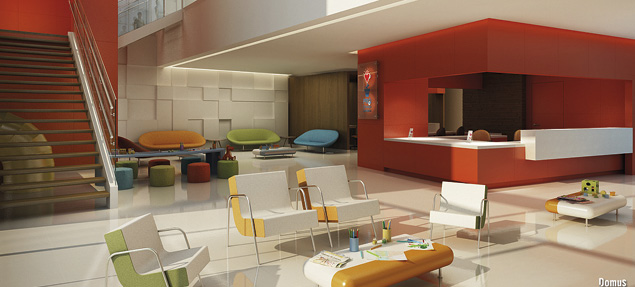
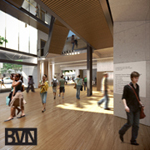
The lobby of the Hospital Pro Crianca Cardiaca, Rio de Janeiro
The Brazilian constitution promises the right to healthcare provided free by the state. But, according to The Economist, two-fifths of citizens are not covered by local primary care, and are dependent on treatment in emergency departments. Says Bitencourt: “We currently have a large number of buildings for health services that, in principle, reasonably meets the needs of healthcare in Brazil, but, at the same time, we demand better distribution of healthcare geographically. Another important point is that we have poor distribution of professionals and health services in buildings for the various regions of Brazil.”
According to Brazil’s Ministry of Health, in 2010 there were 468,785 beds in Brazil, equivalent to 2.45 beds/1,000 inhabitants. The Ministry states that 2.5 beds/1,000 people would reasonably meet the country’s healthcare needs, but Bitencourt points out that the World Health Organization sets an even higher parameter of 4 beds/1,000 people. To meet this target, Brazil would need to increase capacity by more than 296,139 beds – equivalent to about 1,974 new hospitals.
CEMAFE, Santa Fe, Argentina
One of the central tenets of the Santa Fe government’s new public health template is that healthcare facilities must be located at strategic locations to make them accessible to the people. CEMAFE follows this principle, located as it is in a well-connected urban area.
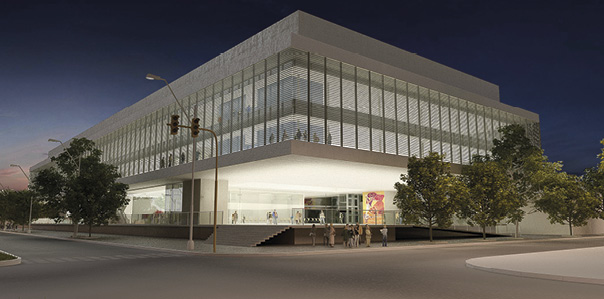
In order to reduce reliance on the use of elevators, the project was approached as a horizontal two-tier structure. The main design challenge was to address the need for natural light inside the building, which was resolved by a series of interior courtyards. One of the main construction challenges was how to deal with the foundations of the building. The solution adopted was a structural system comprising ‘hanging slabs’ of a grid of tensors, which transfer their loads through a network of roof beams to four large columns, each of which is composed of a dozen piles anchored at 35m deep. The centre’s medical departments include gynaecology, urology, ophthalmology, audiology, dentistry, and otolaryngology. Other services include facilities for radiology, ultrasound and endoscopy; and oncological and chronic dialysis care. There are also four outpatient operating rooms, a laboratory, and a gym.
Client: Ministry of Public Works and Housing,
Government of Santa Fe
Chief architect: Mario Corea
Cost: US$ 14,700,000
Size: 11,500sqm
Completed: 2014
Investment opportunities
Elsewhere, other South American countries are investing heavily. Architect Mario Corea, who was born in Argentina but set up his design practice in Spain, says: “Many countries in the region have implemented investment programmes, mainly using public funds, in order to build different types of facilities. I have actively participated in a large-scale public programme in the province of Santa Fe, Argentina where I was involved in the design for eight hospitals and some 80 primary healthcare centres, which have recently been built or are in construction.”
He adds that countries are also following Brazil’s lead by concentrating more on quality: “More recently, other countries such as Argentina, Chile and Peru have also shown themselves to be very committed to quality, choosing to build new modern facilities rather than spending time and money on reforming outdated structures that are very difficult to refurbish, especially in terms of adaptation to new medical technologies and urban conditions.” He highlights his work with the Clemente Álvarez Emergency Hospital as typical of this “new way of thinking about healthcare, which is as a service that must respond to the needs of the citizens”.
Finochietto Sanatorium, Buenos Aires, Argentina
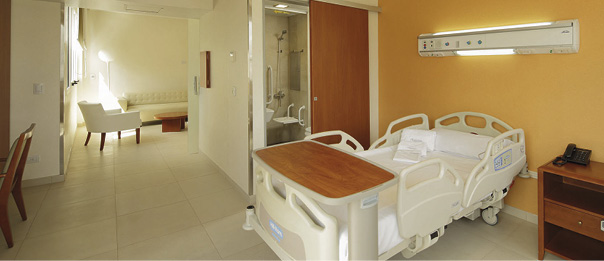
Epitomising South America’s growing appreciation that its healthcare infrastructure should afford respect for the environment, the Finochietto Sanatorium began operating in October last year. The new 10-storey building encompasses sun-protection systems as eaves and sunshades, ventilated facades and thermal-break aluminum-framed windows.
A public-technical circulatory network provides operational efficiency in harmony with patient comfort. At the design stage, the configuration of all functional spaces and equipment was provided by an interdisciplinary team composed of AFS Arquitectos, its specialised consultants, and representatives of the medical, nursing, technical and maintenance staff responsible for the future operation of the institution.
Innovations include: centralised, automated control of the entire facility; an electric co-generation system; a water-condensed VRV (variable refrigerant volume) air-conditioning system; an energy-recovery heat-exchange system; intelligent lighting control; reuse of condensate water and rainwater; and use of green vegetated roofs to reduce heat island effect.
Client: Private Healthcare Insurance
Architect: AFS Arquitectos
Size: 16,700sqm
Cost: Undisclosed
Completion: 2013
But despite large pockets of healthcare expansion in Argentina, the country doesn’t attract foreign private investment, says Corea, owing to restrictions on foreign exchange. Luciano Monza, a partner at ArquiSalud, adds: “There is a lot of different construction projects in healthcare financed by the World Bank, Inter-American Development Bank, etc. But external private investment is not common in healthcare because the national and provincial governments are usually financial agents and the local private healthcare groups are quite strong economically and finance their own buildings.”
Its reputation for bureaucracy and abundance of native healthcare design and policy leaders notwithstanding, Brazil is more open to outside assistance, but there are many other parts of South America, too, where it is common for design projects to involve the active contribution of foreign architectural and planning experts.
In particular, Corea points to Chile, “which has programmed a number of hospitals to be built over the next five years”. American architects Shepley Bulfinch helped Alemparte Barreda and Associates on the design of Chile’s new University Clinic of the Andes, which has the ability to connect with remote surgeries for educational purposes. Rising interest in telemedicine is also noted by Alvaro Prieto Lindholm, an architect at Chile’s Ministry of Health, who comments: “There is growth in this area, linking hospitals that are of low and medium complexity, or that are far apart, with hospitals of great complexity.” He highlights the new hospital for Easter Island, which opened in 2012, as another example of this trend.
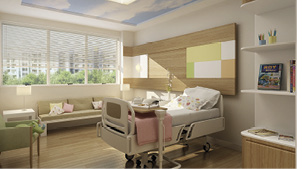 Hospital Pro Criança Cardíaca, Rio de Janeiro, Brazil Hospital Pro Criança Cardíaca, Rio de Janeiro, Brazil
Founded by Dra Rosa Celia Barbosa, the Pro Child Heart Foundation in Rio aims to help children who require cardiac care. A mix of private and public, the hospital’s wealthier patients help subsidise the care of the poorer children.
Above two basements are six clinical floors providing emergency referrals, image diagnostics, surgery, haemodynamics, an intensive-care unit, and inpatient wards. Located close to a cemetery, the hospital’s compact site posed a challenge, requiring RAF Arquitetura to protect the north façade from the sun with an aluminium composite resembling copper; for the cemetery-facing south side, design elements were incorporated to allow for outward views.
“The height of the ceilings needed to be lower than is ideal for a hospital,” comments the project’s architect Flávio Kelner. “Above the ceilings there isn’t much space, so the lighting designers had to install the fixtures while avoiding ductwork and air-conditioning systems.”
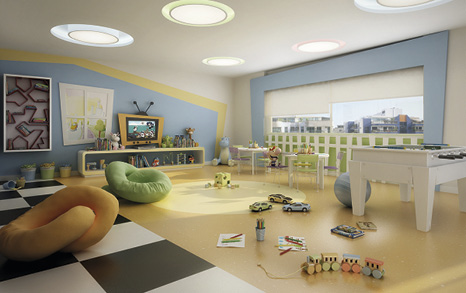 Furniture is playful while each floor has its own colour identity. Materials such as Corian, granite, Formica laminate, vinyl covers, and acoustic liners provide durability without compromising aesthetics. Water is heated via solar panels, and louvres and solar-control glazing help moderate the internal environment. The project has been honoured by the Brazilian Institute of Architects (IAB). Furniture is playful while each floor has its own colour identity. Materials such as Corian, granite, Formica laminate, vinyl covers, and acoustic liners provide durability without compromising aesthetics. Water is heated via solar panels, and louvres and solar-control glazing help moderate the internal environment. The project has been honoured by the Brazilian Institute of Architects (IAB).
Architects: RAF Arquitetura
Client: Pro Criança Cardíaca
Size: 8000sqm
Cost: BRL50m
Completed: 2013
Stalling programmes
Political corruption and opportunism, however, still persist in some parts of South America and remain a threat to the derailment of reforms. Venezuela’s Barrio Adentro is a case in point. In operation since 2003, the government-funded programme comprises four phases: primary care; diagnosis and rehabilitation; upgrading existing hospitals; and new hospital construction. According to Sonia Cédros de Bello, an architect at the Experimental Development Institute in the Faculty of Architecture at the Central University of Venezuela, remodeling and renovation work has stalled, with hospitals closing and equipment sitting in boxes.
“Phase four involves plans for building 16 new hospitals, but only four have been started using a prefabricated system,” she says, adding that hospitals are reliant on government funding as local private investors are deterred from funding projects as there is no security for private property. Consequently, some projects are in chaos; the Ana Francisca Pérez de León II Hospital, for example, opened in 2012, having been under construction for more than a decade. It began as an emergency hospital for both adults and children, before all the facilities for children were removed. Yet children’s health is an area of medicine that Cédros de Bello is adamant still needs much investment.
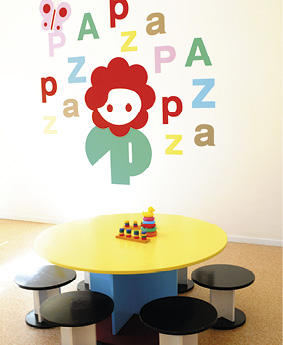 Tony Molleapaza Rojas Children’s Hospital, Arequipa, Peru Tony Molleapaza Rojas Children’s Hospital, Arequipa, Peru
EGM architects constructed the Tony Molleapaza Rojas Children’s Hospital using its own funding, following a request from Marjan van Mourik, director of the PAZ-Holandesa Foundation. Her ongoing aim is to improve the circumstances of disadvantaged children by offering affordable medical care.
Built from local materials, the hospital consists of ten small pavilions – a flexible topology that offers greater resilience against earthquakes – connected via an outside area. The small-scale solutions in the outpatient clinic and wards are combined with ‘hi-tech’ logistics in the operating theatre. This pragmatism is also highlighted in the delivery of services for patients of both the poor and middle classes, but at different rates. Private rooms for wealthier patients come at extra cost but help subsidise the care of poorer patients.
The hospital provides ad hoc operations, as well as speech therapy, psychological counseling and physiotherapy. Benefiting from a separate family house, the hospital also heavily involves parents in their child’s re-integration process. Explains Professor Bas Molenaar of EGM architecten: “There is also simple preventative work, such as teaching the children to brush their teeth properly. Family support is very important. When you help people at a very young age, they can take part in society, but they need a lot of local support from their families.”
Architects: EGM architecten
Client: PAZ Holandesa
Cost: Provided free
Size: 5000sqm
Completion: 2012
Children in care
Even in Brazil, where improvements have been impressive, dedicated children’s hospitals are rare. Fábio Bitencourt says: “In 1990, we had an infant mortality rate of 62 deaths/1,000 live births, which, in 2000, fell to 29.7 deaths/1,000 births. In 2012, this was further reduced to fewer than 14 deaths/1,000 births. Brazil has exceeded the UN Millennium Development Goal of a two-thirds reduction in infant mortality between 1990 and 2015. But we still have a long road ahead in this important work to improve the quality of life for our children.”
An example of the innovative work in this area can be seen in Rio de Janeiro, where the Hospital Pro Criança Cardíaca aims to help disadvantaged children in need of cardiac care. Designed by RAF Arquitetura, the hospital adopts unusual but upbeat themes to create a high-spirited environment (see case study, above).
Some of Brazil’s neighbours still suffer from high maternal and neonatal mortality rates. Health reforms in Peru were passed in 2010, with the country’s Universal Health Insurance law aiming to increase access to timely and quality healthcare, and provide the poor with financial protection from illness. This promises to be a vital support lever for children’s health, in a country where disabled children can find themselves excluded from society. Professor Bas Molenaar, whose firm EGM architecten has helped build a children’s hospital in Peru for free, says many projects progress at a slow pace. But, he insists, there is no shortage of enthusiasm to deliver better healthcare and close the gap between rich and poor. Speaking about the Tony Molleapaza Rojas Children’s Hospital in Arequipa, he describes it as “a private initiative, privately funded but one that is very idealistic – people do work for free”.
He sees the project, marked by its small pavilions and focus on family and community support, as a humble reminder that it may even be possible to develop high-quality healthcare infrastructure in developed countries on a more human scale and to a more basic form.
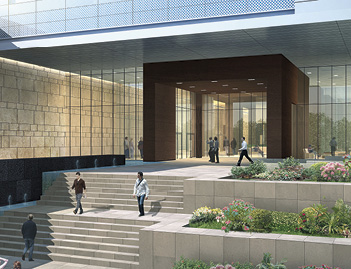 Clínica Las Condes, Santiago, Chile Clínica Las Condes, Santiago, Chile
Johns Hopkins Medicine International asked RTKL to work alongside local architect Mobil Arquitectos on the masterplan for the 220-bed Clínica Las Condes. The challenge was to double the hospital’s capacity on a dense, urban site and integrate the new facility into the existing hospital.
Without compromising the patients’ medical needs, which included a new state-of-the-art intensive-care unit and surgical suite, the hospital also wanted to serve the community’s need for education and health, while acknowledging the city’s pedestrian-centric ethos. The design concept involved filling the site on levels three and above, but pulling the first two levels back in order to widen the pedestrian path. Level one of the expansion is ‘public’ in nature, providing community education, outpatient testing, a café and artwork.
Patient units are broken into three fingers to reduce the building face and allow more sunlight to the south. Public movement is concentrated at the southern edge of the expansion, while staff and materials circulate in the middle along a staff support core between the existing medical centre and the extension.
Architects: Mobil Arquitectos and RTKL Associates
Client: Clínica Los Condes
Construction: Moller y Perez Cotapos
Cost: Undisclosed
Size: 116,700m²
Completed: 2013
Lifestyle improvements
In common with North America and Europe, many countries in South America are coming to terms with rising obesity among their populations. Chile is one such country at the forefront of the movement to encourage people to lead more healthy lifestyles – a focus evident in the design of Clínica Los Condes, by Mobil Arquitectos and US-based firm RTKL Associates (see below).
Promotion of sustainability is also becoming a core objective, perhaps unsurprising in a country so in tune with its environment. Says Alvaro Prieto Lindholm: “This issue has been addressed in recent years and today many hospitals are built occupying solar energy, geothermal energy, thermal insulation of walls and windows, greywater, asbestos-free materials, equipment of low power consumption and, in some cases, green roofs.”
Chile’s capital Santiago has shown interest in an innovative pollution-cutting material that has already been used on a healthcare installation in Mexico City to impressive effect. The Torre de Especialidades, an addition to the Hospital Manuel Gea Gonzales, features a facade comprised of a tile called proSolve370e, which is said to eliminate the pollution from about 1000 cars in the Mexican capital every day. The key to the façade’s smog-reducing powers lies in its titanium dioxide-coated architectural modules, which are activated by ambient daylight. Its German manufacturer Elegant Embellishments suggests the hospital’s 2500m2 screen could be the world’s largest urban air purifier.
But, like elsewhere, green initiatives can succumb to other shorter-term pressures, as ArquiSalud’s Luciano Monza explains: “Sustainability is being discussed a lot in academic circles, but it is not so easy to apply in new projects. This is because construction costs are higher if you apply sustainability concepts, while the legal standards on this issue are not too severe. Plus, energy is still very cheap in Argentina.”
Conclusion
The diversity of South America is startling; while Brazil can rub shoulders with the world’s economic elite, other nations in the region are still hampered by a lack of access to basic healthcare, political cronyism, or financial insularity. In some areas of healthcare design, South America is playing considerable catch-up, while in other fields, such as sustainability, it can be more respectful than most. Joining everything together so that its populations receive the healthcare they deserve represents a formidable but intriguing challenge.
Andrew Sansom is associate editor of World Health Design
|

1.1.jpg)





|