Singapore: Clean sweep
Fatimah Lateef describes the changes Singapore General Hospital has made to its infrastructure to reduce infection risk following the 2003 SARS outbreak.
During the severe acute respiratory syndrome (SARS) outbreak a few years ago, it became clear that, because of their many public entrances, it can be difficult and often costly for hospitals to control the entry, and thus the infiltration, of infectious diseases1,2.
Few hospitals have adequate supplies of isolation and negative pressure rooms in the wards, emergency departments (EDs) and intensive care units (ICUs). But since SARS hit Singapore in 2003, infectious diseases and potential infectious patients are now being managed with high vigilance in an upgraded infrastructure at Singapore General Hospital. Input from clinicians and nurses was obtained during the re-engineering of the departments – and, from the inception, infectious disease specialists also played an important role, educating engineers, architects and contractors about potential infection control risks.
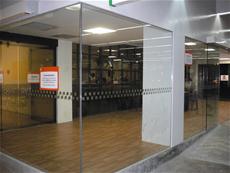 |
| The seperate screening area for febrile patients |
At points of entry into the hospital and in the emergency department, patients are screened using a rapid questionnaire on their travel exposure, fever history and symptoms. Body temperature is measured and documented. Anyone with fever, or a positive response to any question, is channelled to the febrile area of the ED. This febrile screening step is done outside the ED in a specially planned area before formal ED triage is done. The rationale is to identify the high-risk patients as early as possible. Other points of entry into the hospital are also regulated, especially during high-risk periods.
These fever areas are relatively new, constructed following the SARS outbreak when many healthcare systems were overwhelmed because adequate system design, public health functions, equipment and supplies, and collaborative arrangements were either not in place or not in alignment.
Circulating in the air
As air currents can transport infection – the SARS virus is transmitted primarily by bio-aerosol droplets or through direct, very close personal contact – fever and high-risk patients are now being managed separately from others. The febrile areas in the ED have undergone structural re-engineering and the ventilation system has been upgraded.
|
| 'Fever' consultation rooms with negative-pressure ventilation |
Building ventilation, whether natural or mechanical, serves to dilute droplets nuclei in the air and is the single most important engineering control in preventing the transmission of airborne infections3-5. Rooms with negative-pressure ventilation are now available in the new fever areas. Infected air from patients in this area is prevented from staying in the area and circulating in the corridor by an exhaust system that fi lters it to the outside environment. The positive pressure gradient between the isolation cubicles/rooms and the rest of the area is approximately 15 Pa.
Ideally, a negative pressure room should also have windows which do not open, and having anterooms will help reduce the escape of droplet nuclei during the opening and closing of doors. The downside is that patients and staff in negative pressure rooms are at increased risk in the event of a fire. This is because fi re and smoke can be drawn into these rooms from the adjacent corridors or wards by reason of the differential pressures.
Febrile patients who are non-ambulatory and too ill to walk are managed in the critical care/resuscitation area which has two end rooms prepared with negative-pressure ventilation and separated from other cubicles with heavy lead doors.
The observation unit in the ED is also equipped with isolation rooms for the management of potentially high-risk and infectious patients. The doors of these rooms are fitted with a self-closing device. For isolation rooms with no negative pressure ventilation, it is important to have them well ventilated with adequate fresh air exchange.
Complying with guidelines
The hospital’s Infectious Diseases Committee has developed guidelines and operating procedures for the admission of suitable patients to isolation rooms and negative-pressure rooms. However, any changes to infrastructure and facilities will not be effective if staff do not comply with guidelines and safe practices. A consolidated, multi-pronged strategy is essential. This includes not just structural changes but also mechanisms for contact tracing, syndrome surveillance, proper handwashing techniques and the implementation of universal precautions.
|
|
Negative-pressure nevtilation end cubicle in the resuscitation area with lead x-ray proof door partitions
|
Improving general infection control measures, procedures and preparedness has given the hospital the potential to not only enhance routine healthcare on a daily basis but also increase our chance of successfully handling the next pandemic.
Disinfection and cleaning of the febrile areas are also crucial. Disinfection with hypochlorite – 1,000ppm – is regularly done. This is for all ward environments, equipment, horizontal surfaces, surfaces touched by patients and staff and toilet facilities. In each of the isolation rooms of the observation and general wards, there are personalised handwashing facilities to reduce cross-contamination. These isolation rooms help to prevent direct and indirect contact transmission and droplet transmission.
In addition, with the use of computerised records, it is now easier to trace and track patients and information – essential for contact tracing and syndrome surveillance.
To help improve coordination, the Ministry of Health, Singapore Medical Association, the College of Family Practitioners and various other healthcare organisations have created the Primary Care Pandemic Framework, to help primary care clinics work with the 18 government polyclinics to provide appropriate care for influenza and non-influenza patients during a pandemic. The framework advises on how to prepare and organise a primary care clinic for a pandemic, including modifications to clinic workflow and processes to avoid cross-infection, use of personal protection equipment, hospital referral and environmental design and cleaning6.
Fatimah Lateef, MBBS, FRCS(Edin)(A&E), FAMS(Em Med) is senior consultant and director of undergraduate training and education, department of emergency medicine at Singapore General Hospital
References
1. Cameron PA, Schull M, Cooke M. The impending infl uenza pandemic: Lessons from SARS for hospital practice. Med J Australia 2006; 185(4):189-90.
2. Li Y, Huang X, Yu ITS et al. Role of air distribution in SARS transmission during the largest nosocomial outbreak in Hong Kong. Int J Indoor Envt and Health 2004; 15(2): 83-95.
3. Baker J, Lamb CW Jr. Physical environment as a hospital marketing tool. J Hospital Marketing 1992; 6(2):25-35.
4. Burmahl B. Facilities of the future: New design puts patients first. Health Facilities Management 2000; 13(2): 30-34.
5. Coile R. healing environment: progress towards evidence-based design. Russ Coile Health Trends 2001; 13(11): 8-12.
6. A guide to organizing a primary care clinic during an infl uenza pandemic. Version 1, July 2007. Available at : http://www.sma.org.sg/flu/flu_pandemic_seminar/Flu_Pandemic_Guide_2008.pdf ( assessed on 1 Sept 2008).Top: ‘Fever’ consultation rooms with negative-pressure ventilation Bottom: Negative-pressure ventilation end cubicle in the resuscitation area with lead x-ray-proof door partitions
|

1.1.jpg)







|