Post Occupancy Evaluation: Promoting Wellbeing in Palliative Care
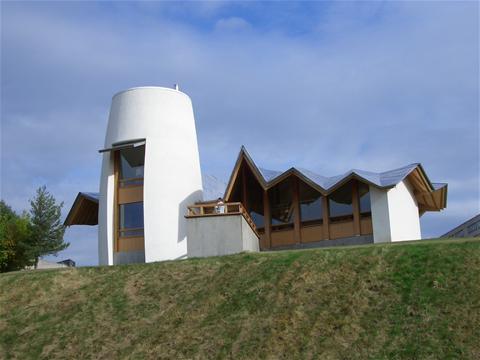 |
| Figure 1: An external view of the distinctive design of the Maggie's Centre in Dundee |
A post-occupancy evaluation of Maggie’s Centre in Dundee provided a valuable insight into the impact of the building’s design on user and visitor perceptions of their own wellbeing.
The Dundee Maggie’s Centre in Scotland, designed by Frank Gehry, opened its doors in 2003 to those diagnosed with cancer and seeking support. The fundamental remit of the Maggie’s Centres is to provide information and psychosocial support for carers and people with experience of cancer within a new healing typology1.
The centres were inspired by Maggie Jencks and pioneered by her husband, Charles Jencks, together with her personal nurse, Laura Lee, who is now chief executive of the Maggie’s Centres organisation.
The organisation has four main goals:
• to lower the stress level of a patient;
• to provide psychological support;
• to help patients navigate the information explosion on cancer; and
• to provide peaceful, restful and striking environments with an important place for art and gardens.
There are currently five Maggie’s Centres open in Scotland, with ten more projected for completion in the UK. As bespoke and distinctive healing environments, they represent an alternative approach to the traditional cost-driven design of healthcare buildings by deliberately foregrounding design as a key factor in promoting wellbeing.
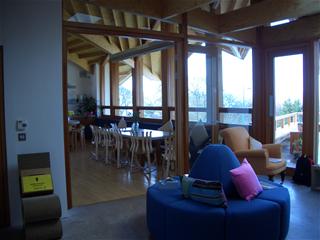
A post-occupancy evaluation of the Dundee Maggie’s Centre building (see figures 1 and 2) was commissioned as a pilot study by The Lighthouse Centre for Architecture and Design in October 2005 and completed in January 2007 by the Ecological Design Group (EDG) at the University of Dundee’s School of Architecture, in association with Bute Medical School, The University of St Andrews and the Maggie’s Centres.
Post-occupancy evaluation (POE) provides a more detailed means of examining the performance of building typologies on a building-by-building basis. The highly successful PROBE programme, which carried out POE on a number of different buildings during the 1990s, only examined one healthcare building2. To date there has been no systematic evaluation and cross-comparison of healthcare building typologies in the UK, although there have been a number of important individual studies elsewhere3.
Seminal POE work by Professor Lawson and colleagues at Sheffield University has, however, proven the link between good design and improved bed-patient recovery times, demonstrating the importance of patients’ being able to view nature, good daylighting, ventilation and patients’ ability to control their environmental conditions4.
Relatively little POE work has been published to date in the UK on small-scale healthcare buildings which correlates perceived states of wellbeing and health with perceptions of buildings in relation to design quality. This study attempts to identify key design factors that influence perceptions of wellbeing and health in these environments, which are playing an increasingly important role in UK government health policy5.
Aims and objectives
The aims of the study were to evaluate:
• visitor and staff responses as users of the building;
• physical performance of the building;
• design and construction process; and
• develop a cross-evaluative methodology for wider use in small-scale healthcare buildings in order to improve the briefing process.
The objectives were to establish:
a) the effectiveness of the design concept in terms of the original brief and care model;
b) overall user satisfaction with the building;
c) the extent to which people perceive the building as contributing to their sense of comfort, wellbeing and health, and the reasons for this;
d) a comparison of the ease, speed, and cost of construction with a standard domestic-scale palliative care building;
e) an assessment of the building’s physical performance and sustainability, including management and maintenance issues, and the level of energy costs compared to normative measures; and
f) recommendations for the future Maggie’s Centre briefing process and further development of the evaluation methodology for other small-scale healthcare buildings.
This paper focuses primarily on the first three objectives, which contribute to the discourse on health and design. It is recognised that the objectives are interdependent to some extent, and the methods identified for the study reflect this interdependency.
 |
 |
Left: Figure 2 - Inside the Maggie's Centre which foregrounds design as a key factor in promoting wellbeing
|
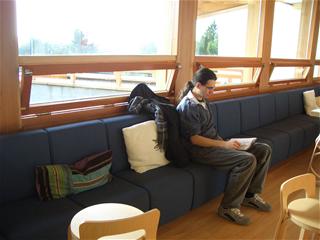
Right: Thirty-four visitors responded to the questionnaire on the relationship between health and design quality |
Method
An initial desk top review of existing literature on the evaluation of healthcare and other buildings in the UK and elsewhere was undertaken. While existing tools used by the National Health Service (NHS) in the UK provide a valuable means of auditing the design quality of healthcare buildings6, the predefined statements approach does not allow for a more open-ended form of inquiry that might reveal hidden factors. The approach developed through the PROBE studies7 asks the user to offer up factors which work or do not work well, providing an appraisal of design quality as it is directly experienced by the user.
A ‘mixed-mode’ approach drawing on Zeisel’s environment behaviour methodology8 was developed. This initially involved semi-structured interviews with full-time staff, part-time staff and volunteers, and a PROBE-style questionnaire9 for visitors. These were carried out in the building over a single day. The aim of the in-depth, semi-structured interviews was to supplement the questionnaire with a collection of more detailed insights from participants. Additionally, user and staff interactions with the building were observed and photographed during the day.
Anything unusual that might influence the effectiveness of the design principles involved was noted. Qualitative questions augmented the PROBE-style questionnaire which previously concentrated on comfort issues and work conditions. These additional questions were drawn from AEDET Evolution and ASPECT10, but were rephrased to allow for a more open-ended response. Two key questions on visitors’ sense of their own health and quality of life over the past week were drawn from the European Organisation for the Recognition and Treatment of Cancer (EORTC)11 standardised questionnaire for oncology. The interviews with staff and the technical team were used to further establish if there were any significant work issues arising from the innovative design of the project over the two and a half years since its completion.
Copies of the original architectural brief and working drawings were obtained as reference points for user experiences and examined in terms of healthcare design quality. The drawings were also used as a basis for a sensory analysis undertaken on the day of the survey which involved the use of a multi-modal meter to measure temperature, humidity, lighting and noise levels both inside and outside of the building at five strategic points.
All findings from the interviews with the staff team were then compared to those from the visitor questionnaire to establish points of convergence and divergence. This was carried out in recognition of the intersubjectivity involved in the study and the need to understand and analyse all points of view. The resultant findings were then cross-evaluated against the observed environment behaviour, the brief/drawings/specifications and the physical data obtained on the day to determine if the issues raised were reinforced or contradicted. A ‘walk-through’ tour of the building was conducted with the client representative to help clarify contradictory findings and provide further information on issues raised.
An important aspect of the method was that the research was co-ordinated by an experienced architect with knowledge of social science research methods. This enabled the research team to draw out subtle interrelationships between the technical and social aspects of the study. POE requires a high degree of skill because of the complexity of the issues involved and because they are often interrelated in a tacit manner. The skill is in identifying and articulating these hidden issues. The interdisciplinary dialogue between the architect and medical psychologist was highly effective in this regard. The very strength of this method, however, is also potentially its greatest weakness because of the limited number of people with this skill and the degree of training required.
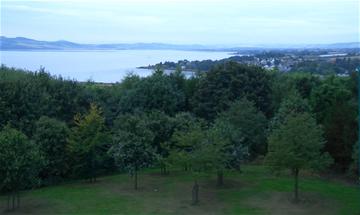 |
| Figure 3: Views of nature |
Results
Thirty-four visitors responded to the questionnaire on the day with two full-time members of the Maggie’s Cancer Caring Trust, three session workers and one volunteer responding to the interviews.
This paper concentrates on the results which directly relate to the relationship between health and design quality and the main goals of the Maggie’s Centre outlined earlier. The questionnaire prompted visitors to comment on the building’s layout, use of space, their needs and the views both within and looking out of the building. These were rated in terms of effectiveness using a seven-point scale, with additional comments made where necessary.
The overall building design was given the highest rating by 70% of the visitors. The most positive impression of the building was of the views outside, which received the highest rating level of any aspect of the design (82%). The highest rating levels for the effectiveness of functional aspects such as understanding the layout of the building (52%) and use of space (41%) were curiously lower, although nearly 78% of visitors thought that the building met their needs well or very well.
A major aspect of post-occupancy evaluation is the degree of comfort and personal control which users experience in a building. This is particularly important in healthcare buildings where visitors are likely to be extra sensitive to environmental conditions due to their relatively poor state of health. The overall self-reported rating of global health (over the past week before the survey) was somewhat less than expected for cancer survivors according to the EORTC norm, with 64% scoring between 5 and 7 on the 1-7 scale rating. Likewise the quality of life over the same period was only 57%. All measures of overall comfort satisfaction (temperature, comfort, noise and lighting levels) were correlated with the rating of health.
Although nearly 90% of visitors felt that the building was comfortable overall, nearly half of this group complained about a degree of overheating, excessive natural light and excessive dryness of the air. At the same time, nearly half felt they had no personal control over the heating or noise conditions, with around a third feeling they had no control over cooling, ventilation and lighting (see figures 3 and 4).
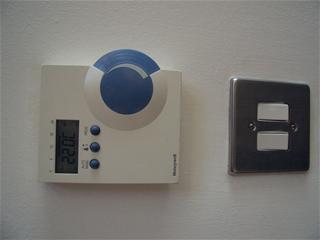 |
| A significant number of visitors were concerned by a lack of environmental control |
Significant correlations were found between the self-reports of ‘wellbeing’ in the visitors and their perception of control of the ‘cooling’ and ‘ventilation’ (p<0.05). Weaker effects were also found for ‘heating’ and ‘lighting’ (p<0.1).
Interestingly, despite the various comfort issues raised and the apparent correlation of wellbeing with control, the overwhelming majority of users consciously stated that a personal degree of control was actually not important to them. The results for the visitors’ survey were almost exactly replicated in the interviews with the staff. These are paradoxical findings which require careful analysis.
Visitor and staff comments and ratings of comfort conditions were corroborated by the physical readings taken on the day. Indoor temperature readings on the day of the questionnaire were relatively high and reached a peak of 24.4°C by midday indoors on a cold March day, even though the main heating control was set to 22°C.
Humidity readings were relatively low inside the building, averaging around 30%, compared to an outside humidity level of 50%. This would account for a significant percentage of visitors experiencing the air as being dry. With it being a sunny day outside, the contrasting low levels of internal light exacerbated the glare from the south-facing windows.
Noise levels, on the other hand, were at a normal conversational level in most parts of the building, apart from the upper-level space. Observation of people using the building over the course of the day also corroborated many of the findings. A very subtle level of interaction was observed between the staff, visitors and the layout of the building, as staff were highly attuned to the arrival of visitors given the open-plan layout of the building, and visitors were quickly welcomed. Visitors tended to gather in the kitchen area, which also offered the best views out of the building (see figure 5).
Staff and users attempted to modify the indoor temperature by opening windows and letting out heat rather than attempting to control the heating itself.
Discussion
The study did not aim to prove a direct connection between design and health benefits, but whether or not visitors themselves perceived such a link and if this related to their perceived quality of life and health status at the time of the questionnaire. The quality of life for visitors was found to significantly and positively relate to the length of visit (rs = 0.45, p<0.05). Although the effect is quite weak, it does suggest that the experience of visiting the building has a dose-response effect. Given the size of study, this needs replication to provide further evidence. The two additional questions on health and wellbeing were ‘state’ measures asking the visitor to offer their opinion on how they felt about the way the building was influencing either their health or wellbeing at the time of answering the questionnaire.
However the interpretation of these associations is not altogether straightforward. It would appear that positive perceptions of the building features are linked with higher ratings of health and wellbeing. It is possible however that the pattern of causality may be the reverse. That is, those visitors who rated their health or wellbeing positively may feel able to rate the building enthusiastically.
Specific points worth noting are:
a. Visitors’ needs being met within the building were associated with their perceptions of the building influencing their health in a positive manner.
b. A significant relationship was found between the building setting the person at ease and a perception of a stronger self-reported rating of health.
The consistent positive relationships found across the various comfort features, their control and ratings of wellbeing suggest that if control was considered to be available this had a positive effect on wellbeing. This reinforces the view that making an environment easy to ‘read’ by offering systems to allow the changing of comfort parameters will enhance wellbeing and possibly self-reported health.
This interpretation is speculative but it would be a fascinating area to confirm in a further investigation and could develop our understanding of this person-environment interaction. The top ratings for comfort were generally lower than those for the building design overall, again suggesting that there may be a kinaesthetic compensatory factor at work with visitors also ‘trading off’ their appreciation of the views, image and overall quality of design against comfort factors.
Although much work has been done on thermal comfort in buildings12, little work has examined the interaction between
different sensory perceptions of comfort. This interactive appreciation of a building can be compared to holistic approaches, such as that adopted by the Maggie’s Centres, which recognise the essential interplay of non-medical factors in patient care such as relationships with staff and other users. Such physical ‘nursing qualities’ in buildings can be identified as views in and out of a building, the overall image afforded by a building and the ability for a building to afford a friendly dynamic between staff and visitors.
This ‘trading off’ has also been recognised as the ability for people to ‘forgive’ a building its faults, in terms of the physical comfort levels afforded, because of other design quality factors which are not always easy to identify. This is particularly evident in the Dundee Maggie’s Centre, where individual concerns with different specific aspects of comfort such as heat, light, and noise are ‘forgiven’ in the high overall levels of comfort that visitors reported13.
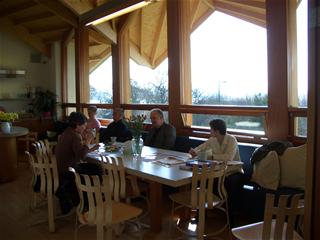 |
| Figure 5: Visitors tended to gather near to the kitchen which was at the heart of the building |
Conclusion
The results of the study indicate that the building has successfully achieved the following objectives of the design brief:
• a highly effective design concept relative to the Maggie’s Centre’s care model;
• very high user satisfaction overall;
• a high level of overall comfort;
• user perception of increased health and wellbeing due to visiting the building;
• particular appreciation of the views out of the building.
Comfort issues which emerged from the survey included:
• a degree of overheating due to solar gain, lack of cross-ventilation and poor heating system control; and
• a degree of glare due to low-angle solar penetration in the kitchen area.
Given the results and discussion there are several issues that should be considered in relation to the future briefing and design of Maggie’s Centres and other similar typologies. It is clear from the study that there is a positive correlation between many design aspects of the building and visitors’ sense of health and wellbeing at the time.
The findings relating health and wellbeing to visitors’ sense of control over ventilation and cooling are important and suggest that attention needs to be paid to the design and specification of heating, ventilating and cooling controls, if a visitor’s sense of health and wellbeing is to be further improved.
What is striking, however, is that while visitors consciously stated that a degree of control in these areas was not important, the degree of control perceived to be available did affect their sense of wellbeing. In other words, they may like to feel ‘in control’ of ventilation and cooling (“I can always open a window if I want to”), but without necessarily having to resort to controlling these themselves – this is an example of the ‘placebo’ effect at work in buildings and translates a common idea in nursing into design practice. The ability for visitors to perceive themselves as being able to control their environment ties in closely with the Maggie’s Centres ethos of empowering people to adapt to their surroundings and take control rather than being controlled as passive recipients in a care system.
The apparent ‘kinaesthetic compensation’ at work in the building, which gives it a high ‘forgiveness’ factor is also a valuable design lesson and reaffirms the Maggie’s Centre approach to providing an exceptionally high quality of design in their buildings, generating peaceful and striking environments.
The POE methodology used here is an effective means of triangulating different methods and cross-evaluating both qualitative and quantitative factors in the design of healthcare buildings. The study is only a small one, but points to a direction for further research which can expand the field of POE to embrace aesthetic design qualities as well as physical performance factors.
Principal Authors
 |
Dr Fionn Stevenson is a reader in sustainable design at Oxford Brookes University and co-director of the architecture unit at the Oxford Institute of Sustainable Development |
Professor Gerry Humphris, Bute Medical School, University of St Andrews, Scotland
Lesley Howells, Centre Head, Dundee Maggie’s Centre, Scotland
References
1. Jencks C. The Maggie Centres Movement Eight Years In..., Fourth Door Review 2005; 7:30-33.
2. Building and Research Information 2001; 29(2) March-April is a special issue on post-occupancy evaluation, and has a number of papers reporting on the PROBE experience. Vol 33(4) September 2005 provides an update on this area. See also www.usablebuildings.co.uk for an up-to-date account of POE studies in the UK.
3. Burt-O’Dea K. (2005) Design Impact Study. The European Health Property Network studies five different healthcare buildings in different European countries.
4. Lawson B et al. The Architectural Healthcare Building and Its Effects on Patient Health Outcomes, University of Sheffield; 1998-2001.
5. Francis S. Design Developments in the UK: the Case for Investing in Good Design. In Wagenaar C (ed), The Architecture of Hospital (525-531). Rotterdam: NAi Publishers; 2006.
6. Francis S. (2006) ibid.
7. Cohen R, Standeven M, Bordass B, Leaman A. Assessing building performance in use 1: the Probe process. Building Research and Information 2001; 29(2):85-102.
8. Zeisel J. Inquiry by Design; environment/behaviour/neuroscience in architecture, interiors, landscape and planning. London and New York: WW Norton Co; 2006.
9. Cohen R et al.(2001) ibid.
10. Both these design evaluation toolkits are available from NHS Estates http://knowledge.nhsestates.gov.uk.
11. European Organisation for the Recognition and Treatment of Cancer http://www.eortc.be/home/qol/.
12. Nicol JF, Humphreys MA. Adaptive thermal comfort and sustainable thermal standards for buildings. Energy and Buildings 2002; 34(6):563-572.
13. Stevenson F, Humphris G, Howells L. A Post Occupancy Evaluation of the Dundee Maggie Centre. Final Report for SUST@Lighthouse Centre for Architecture and Design, Glasgow; 2007.
|

1.1.jpg)




|