Palliative Care Unit Design: Patient And Family Preferences
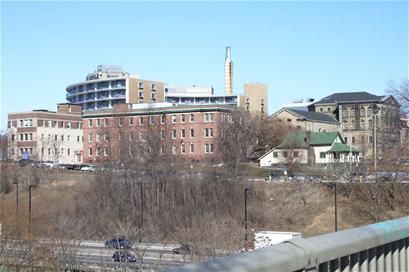 |
Figure 1: The existing Bridgepoint Hospital
in Toronto prior to development
|
Diana Anderson’s qualitiative study reveals that a desire to choose levels of privacy and control their environment characterises patient and family preferences in the design of palliative care units.
Healthcare design is a growing field of study and practice, with numerous studies demonstrating the impact of the built environment on health and health outcomes1,2. The notion of evidence-based design “borrows from work done in evidence-based medicine to carefully observe, quantify and analyse the way people use buildings” and is increasingly sought after since a lack of published data exists, especially in Canada3.
The primary purpose of this qualitative study was to identify what palliative care patients and their families perceive to be important elements in the design of a palliative care unit (PCU) for end-of-life care. Secondary objectives included exploring whether differences in preferences and perceptions exist between patients and family members. This study looked at the palliative care population of Bridgepoint Hospital in Toronto, Canada, and evaluated patient and family preferences for room design and layout, as well as preference for private versus shared accommodations.
 |
Figure 2: 'Half round' Bridgepoint Hospital building built in 1963 (Courtesy of Perkins Eastman Black)
|
Background to Bridgepoint Health
Bridgepoint Health is Canada’s largest integrated healthcare organisation for specialised complex care services, including rehabilitation, long-term care and community-based care4. The Bridgepoint Hospital PCU provides 41 patient beds and offers the option for short-term or long-term palliation.
The majority of rooms are shared by four patients (ward rooms), several are shared by two patients and there are currently no single or private rooms in either unit5. The World Health Organization (WHO) defines palliative care as “the active, total care of patients whose disease is not responsive to curative treatment. Control of pain, of other symptoms, and of psychological, social and spiritual problems is paramount. The goal of palliative care is achievement of the best quality of life for patients and their families.”6
One of the health concerns facing the patient population at Bridgepoint Hospital is the physical environment, an important determinant of health7. The existing hospital structure, built in 1963, is semi-circular in shape, making circulation a challenge for many patients (Figures 1 & 2).
Wheelchairs are difficult to manoeuvre in a curved hallway and patients suffering from neurological diseases can often become disoriented without proper visual cues. Rooms are small and unable to accommodate wheelchairs, which are left in the hall5,8.
There are no washrooms in any of the rooms – they are instead located at the end of each unit. Bridgepoint Health is currently embarking on a major redevelopment project which will include a new hospital building and the design of a new and larger palliative care unit4,5,8.
Precedent research
Should architects be designing end-of-life care facilities with more private rooms for dying patients and their families? The literature presents us with precedent studies that have suggested single rooms have a number of benefits over shared rooms, including greater flexibility, increased privacy, ease of sleeping and less noise. However, single rooms have also been said to have disadvantages when compared with shared rooms, including mood disturbance due to isolation, and poor nursing observation9.
| Interview Questions |
| 1) What are your thoughts about the patient rooms here on the 4th floor? |
| 2) What would be your preference for a room if you had a choice? Why? |
| 3) How does the room environment make you feel? |
| 4) What control do you have over this environment? What would make a difference? |
| 5) What do you do for privacy in a four-bedroom room? |
| 6) Do you like to share a room? Why or why not? |
| 7)What are your preferences for washrooms on this floor? |
| 8) How do you feel about other parts of this hospital? |
| 9) If you had a chance to design this unit over again, what would it look like? |
A qualitative study conducted in the UK9 demonstrated that while patients in a palliative setting may often prefer shared accommodations for the benefit of social interaction and a constant reminder that another person may be experiencing similar events, family members often prefer private accommodations so that they may grieve and show emotion without others around10.
The current study documents whether the research precedents apply to a Canadian hospital and extends the literature beyond the preference of private versus shared rooms to include physical factors that promote comfort, layout and distribution of patient rooms.
Materials and methods
Data collection was carried out during the months of February and March 2006 at the palliative care unit of Bridgepoint Hospital. Both the University of Toronto Research Ethics Board and the Bridgepoint Research Ethics Board approved the study. Patients were eligible for the study if they were deemed healthy enough to participate by the medical and nursing staff on the unit. Informed written consent was obtained from all participants.
Data was collected through semi-structured interviews using a set of nine open-ended questions (Table 1). Six patients and six family members were interviewed, each individually. Handwritten notes were taken during each of the sessions and were later converted into typed notes. Demographic characteristics of participants are outlined in Table 2.
Data analysis involved five steps adapted from Nancy Diekelmann, who developed a seven-step method for analysis of qualitative research based on phenomenological methodology11. The first step involved careful reading of interview notes, aimed at distilling essential patterns and themes from the data.
Table 2: Demographic Characteristics of Participants*
|
|
Patients (n=6) |
Family members** (n=6) |
| Gender |
|
|
| Male |
2 |
3 |
| Female |
4 |
3 |
| Age Bracket |
|
|
| 40-60 |
2 |
4 |
| 60-80 |
2 |
2 |
| 80 and over |
|
|
| Room Type |
|
|
| Shared room (2) |
3 |
3 |
| Ward room (4) |
3 |
3 |
| Palliative Care Unit Type |
|
|
| Long term unit (up to one year or more) |
1 |
2 |
| Short term unit (0-3 months) |
5 |
4 |
*Ethics approval was granted under the guideline that participants remain anonymous, with no personal information obtained regarding type of illness. Ages have been estimated to provide some detail with respect to participants. No information was obtained regarding exact lenght of stay (only short or long term unit), cultural and ethical backgrounds or religious beliefs. More female patients interviewed reflects the higher number of female inpatients in the Bridgepoint PCU.
**Family members included: 1 wife; 2 husbands; 1 mother; 1 son; and 1 daughter-in-law
|
Common themes were then identified in order to develop a coding frame. Themes appeared to fit within two overall thematic categories: ‘external reality’, defined as the relationship between people and their physical environment; and ‘internal experience’, defined as the way the environment mediates meanings, individual feelings and the relationships between people.
The categories and their themes were then compared to issues highlighted in the published literature. A codebook was then created and transcripts were thoroughly coded using the coding frame developed (Table 3). The final step involved grouping interview statements with similar codes together, keeping patient and family comments separate. This allowed for a thorough analysis of each theme and a way to systematically compare and contrast the two participant groups.
External reality
Under this category, eight themes were determined to be important aspects of the physical environment for patients and families: room size, noise, light, storage, temperature, colour, washrooms, and social spaces (Table 3).
Room size: Although all of the family members interviewed mentioned room size, only one patient did. Families felt that rooms are too small in terms of square footage, approximately 90 ft2 per patient: “There is not enough room for families to stand around the dying patient’s bed.” There is also a lack of storage space, both for personal items and for hospital equipment. One patient suggested incorporating regular service modules into the design of the halls, so that equipment can be stored in these alcoves without obstructing circulation.
Light: Natural light was recognised by both participant groups, but more by the families as being “important in the feeling of well-being.” Due to the current room configuration, if the patient by the windows keeps the curtain closed, natural light is blocked for the other bed located near the door (Figure 3). Patients said that they had not seen daylight from their beds for weeks because of this layout. Artificial light was also mentioned, as there currently exists only a fluorescent fixture over each bed. Participants acknowledged the need for softer light sources.
Noise: Patients and families brought up noise as being disturbing, including noise from roommates and other families, as well as staff and hallway noise. However, one patient felt that the noise in the halls from staff was a positive factor as a constant reminder of activity and life. Families prefer not to close the doors to the rooms in order to block the noise, for fear of nobody monitoring their loved ones.
Washrooms: The feelings surrounding washroom preferences in a PCU were unanimous amongst all participants. Each patient room, whether shared or private, needs a connecting washroom, with or without bathing and shower facilities. Washrooms located down the hall are no longer acceptable to patients and families. The PCU currently has one sink per room, but it is not centrally located and tends to be used by only one patient and their family. Suggestions by participants were to have one sink per bed or a central sink for each room, in addition to connected washrooms.
Social spaces: In respect of social spaces, it was felt that choice is needed and one patient said: “There should be several options for lounge spaces; some larger ones and a few smaller ones to sit in with a visitor or by oneself.” It was generally also perceived that lounge spaces on the ward have little privacy and no choice over the television channel selection. Patients and families preferred the smaller “quiet room” on the ward as a more private space that they could reserve for family events, in comparison to the more public lounge spaces.
Additional features: Additional design recommendations included a central nursing station so that nurses can access rooms and observe patients easily, colourful spaces and a more home-like setting for the ward, as palliative care does not require the same amount of medical equipment as other wards and thus the environment can be made less institutional in appearance.
Family concerns: Perhaps because of their ‘external reality’, family members raised themes additional to those raised by patients: halls as social spaces, ventilation, furniture and PCU location within the hospital (Table 3). Two family members felt that hallways were a potential space for social interaction, noticing that most communication takes place in these circulation spaces versus the specified lounge areas. Four family members discussed ventilation as a fundamental component of a PCU. Patients requiring help with toileting at the bedside leads to odours which invade the
space of other patients, making it unpleasant for visitors and families.
Thus, an efficient air exchange system should be considered for shared inpatient wards. Families felt that at least one comfortable chair is needed next to each patient bed, as current chairs are institutional and uncomfortable for visitors: “I sit in my husband’s wheelchair to watch television with him. I can’t even watch television on the chair that is in the room, it is too uncomfortable.” Two family members felt the PCU should be located on the main floor of the hospital, so that patients can access the outdoors easily if they are ambulatory (architecturally, a terrace or roof garden could be an alternative for higher floors).
Internal experience
Under the category of ‘internal experience’, three overall themes emerged from the data analysis: room type, autonomy (privacy & control) and shared space (Table 3).
Categories and Themes Identified
|
| 1. External Reality |
2. Internal Reality |
1) Room size
2) Storage
a. personal
b. equipment
3) Light
a. Natural
b. artificial
4) Noise
5) Temperature of rooms
6) Colour and spaces
7) Washrooms & sinks in patient rooms
8) Social spaces
a. family room, lounges, quiet room
b. cafeteria
c. main entrance & lobby
d. halls
9) Air/ventilation
10) Furniture
11) Kitchen & laundry facilities
12) Location of PCU in hospital |
1) Room type
a. preference: single, shared, wardroom
b. feeling / mood when in room
2) Autonomy
a. Privacy
b. Control
3) Shared space
a. supportive companionship & social interaction
b. patient compatibility
c. observable death and dying process
d. visitor experiences
e. feeling secure as patient is not alone
4) Stage of care an room type
a. STP vs LTP
b. privacy need as disease progresses
5) Patient being moved as indication of death being near |
Note: Bolded themes indicate family members preferences, which were not mentioned by patients (all other themes in regular text were mentioned by both patients and families). Themes are in no particular order.
|
Room type: All participants discussed a preference for room type. Three patients said that they would prefer to be cared for in a single room, for reasons of being private individuals and feeling upset by noises from roommates, such as laboured breathing and moaning. Two of the three other patients expressed a preference for a shared room with two beds. Although they acknowledged that a single room gives more privacy, their desire for a shared room was based on companionship and being able to observe the surrounding activity: “I wouldn’t choose a private room – I would rather have a roommate. I would think it would be very lonely in a private room.” However, they acknowledged the need for private rooms to be made available for patients who might prefer this option. The remaining patient was also in favour of a shared space, but for financial reasons felt that a ward room with four beds would be his first choice.
Similarly, three out of the six family members said that they would prefer a private room, for reasons of wanting to visit with their loved ones in private and because they consider dying a personal process: “A family should have their privacy and should not share the death with three other people. What you say in the heat of the moment, when you announce your love for someone, it is better not to be overheard.”
In comparison, two of the three remaining family members said they would prefer shared accommodations, because of the possibility of social interaction and having others around to observe their loved ones in case of emergency. The sixth family member said that she had initially wanted a private room for her husband but, on spending time with him in a ward room and interacting with other families, she now prefers a shared room.
Shared space: Due to its frequency during discussions, the theme of shared space was explored further with all participants. Reasons given for this preference were supportive companionship and social interaction, patient compatibility and observing death and the dying process. Patients with a shared room preference felt that companionship outweighed the desire for the privacy one could obtain from a single room: “Shared rooms in palliative care are an important part of the environment, with respect to the friendships and comfort that develops between patients.” Barriers to communication between patients and families in a shared space included different languages spoken and patients who keep their curtain drawn.
Although several patients reported feelings of distress from the experience of watching and listening to their roommates, one patient felt comforted by observing the dying process: “It was good to see that [dying peacefully] because you often hear horror stories surrounding death and dying in a hospital.” Families were concerned that the noises and suffering of roommates would distress their loved ones. One mother said that her daughter insisted on keeping the curtain open so that she could constantly check on her dying roommate to make sure she was not in distress. Family members suggested an additional benefit of a shared space – the notion of feeling secure as their loved one is not alone when they cannot be there. In case of a medical emergency, families were at ease to know that roommates could notify medical personnel, as there is limited visibility into the rooms by staff.
Overall, half of participants showed a preference for private rooms in a hospital PCU. Individual preferences for room type are shaped by both personality (e.g. being a private person) and events (e.g. seeing a family member, as a patient, enjoy a shared room). It became clear throughout the data collection that towards the end of life, people are highly adaptable to the environment. Firm beliefs on room type were expected at the outset of the research, but views appear to change for both patients and families depending on various factors, such as illness stage, roommates and witnessing events.
Patient compatibility: Patient compatibility was a greater issue than initially anticipated. One patient felt that choice for room type is dependent upon the compatibility of the roommate: “I would most likely welcome a single room if I was with someone I couldn’t get along with.”
The majority of patients and families said that there should be more attention given to placing similar patients together in the same room in terms of health status. They explained that being placed with a roommate who is not compatible would enhance the difficulty of the experience: “The physical environment is always the same, but the feeling shifts according to the roommate.” This patient felt that a PCU design should focus on separating the ambulatory patients by giving them smaller private rooms to sleep in, but provide more community spaces.
Privacy and control: When asked about privacy and how it is achieved in a shared space, patients said they use the curtain when medical or nursing care is administered, or for personal hygiene reasons.
However, even with the curtain fully drawn, patients reported feeling uncomfortable. One patient preferred to keep the curtain fully drawn at all times, while the others expressed a preference for not wanting to feel separated from the activity around them: “I don’t like to be shut in; I don’t draw the curtain. I like to be aware of things going on around me.”
All six family members said that there is a complete lack of privacy in the rooms and that a curtain is not sufficient. A curtain does not provide a sound barrier and one family member suggested the use of moveable screens or soundproof partitions as an alternative. Generally, patients appeared to adjust to the space around them, while families showed concern for a lack of privacy for their loved ones and for them as visitors.
Family concerns: In an assessment of their ‘internal experience’ it is interesting to note that family members identified a number of additional themes (Table 3).
In terms of stage of care and room type, one family member felt that patients in a short-term ward could benefit from shared spaces, but in a long-term ward there is more time to observe suffering and death, so a private room is preferred. Four family members felt that privacy is needed as diseases progress: “If someone is obviously dying, maybe they should be wheeled into a private room where the family can congregate.”
However, another family member expressed fear in seeing a patient moved to a new space, as this could indicate the nearing of death. Thus, there is a need for flexibility of room assignments throughout the stay, taking into account patient and family desires.
Finally, two family members mentioned the need for spaces that recognise their role as family and promote a feeling of independence, such as laundry and kitchen facilities. These spaces allow families to participate in the care of their loved ones, part of the overall philosophy of the palliative care environment.
Study limitations
Certain limitations existed in this research. Audio-recording of interview sessions was not possible and no transcripts were produced. In order to address this issue, the data was kept consistent by taking the best notes possible, in addition to strategic listening during the interviews in order to record text to use as quotes in the final research report.
Perhaps the most apparent limitation to the study is the fact that the researcher was the only individual to collect and code the data. Finally, this small sample of participants was drawn from a single hospital setting, which may limit the ability to generalise results. However, the qualitative literature also argues that a small participant group is not necessarily chosen to represent some part of the larger world12.
Thus, the results of this research may not be applicable to all palliative care patients and their families, but it does provide a glimpse into the nature of palliative care at one Canadian hospital. These results may also vary across cultures and geographic locations, so this would have to be explored further in future studies.
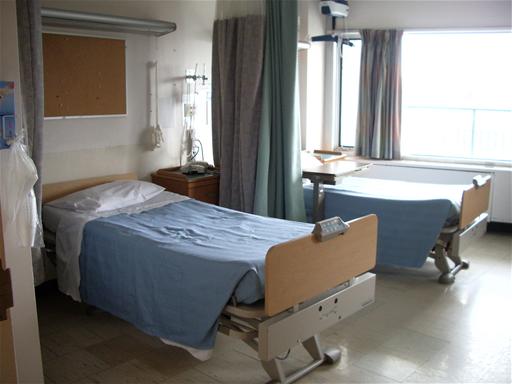 |
Figure 3: View of two patient beds in a ward
|
Choice and control
Palliative care patients and their family members have identified significant issues related to end-of-life care, with an emphasis on the design of the physical environment. It would seem that patients’ individual preferences may depend on their own symptoms and experiences, particularly how they interact with other patients. Therefore, it could be assumed that end-of-life care facilities require a range of room types and sizes to enable patients to select the type that they prefer, despite the recent trend to provide primarily single patient rooms in new hospital development.
The data obtained from this study supports two interesting conclusions. Firstly, that being able to decide levels of privacy and community is of great significance to patients and families. Secondly, that being able to control the environment is also essential. Meeting these needs through various planning and design strategies is likely lead to higher levels of comfort for patients and their families towards the end of life.
The results of this study have significant clinical and design guideline implications. The findings suggest that a more customised approach to palliative care design may be required, given the variability in preferences amongst patients and between patients and their family members. Ultimately, what is needed is a sensitive design approach to an environment for the terminally ill, taking into account both patient and family preferences.
Recommendations
An important observation made throughout the interview process and later confirmed with data analysis was the notion of individual variation in the perception of physical environment design. This indicates the need for a variety of patient rooms and public places.
The need for further individual assessments is suggested, in order to gain a more detailed understanding of what each patient and their family experiences. In addition, patient and family preferences for room type may change as death approaches and thus more careful research into the stages of the dying process and how this relates to room preferences must be explored.
Design recommendations for a shared patient room include an allowance for privacy through some form of partial walls or soundproof partitions that could then be opened should companionship and social interaction be desired. In addition, there is potential for incorporating the idea of halls as community spaces into a PCU design. The current research results suggest that this type of design concept may support patient and family preferences for rooms that allow privacy with ample space provided just outside the rooms for social gathering. Patient room sizes could be reduced to allow a wider corridor, serving both as a circulation space as well as community space. Table 4 outlines a summary of design recommendations for a PCU.
Future directions for this research include the possibility of expanding the participant population to include hospital staff members and integrate their suggestions with those of patients and families. The results from this research study suggest that a choice should be provided through the provision of several room types. One family member from Bridgepoint said: “I think at different stages of care, you need different things. I think you’ll always need the option of single and shared rooms.” When asked what they would do if they could redesign the unit themselves, all twelve Bridgepoint participants reinforced this design suggestion.
| Design Recommendations for a PCU |
| External Reality |
Provide adequate room size, approximately 150-200 square feet per patient
Alcoves in hall for storing equipment and shelving in rooms for belongings
Natural light accessible for each patient bed and provide a reading lamp
Moveable partitions create privacy and block noise as an alternative to curtains
Patients and families desire colourful settings and a home-like setting
Washrooms connected to each room and a sink for each bed or a central sink
A variety of social spaces, with the allowance for serveral smaller community areas. Architecturally, the design of halls as possible interaction areas for patients, families and staff has potential
Provide an adequate air exchange system, as odours can disturb patients and families
At least one comfortable, easily moveable chair next to each patient bed
If the PCU is not on the ground floor; terraces and roof gardens can be designed |
| Internal Experience |
A variety of room types are needed; both private room and shared two-person rooms
Control over personal space is essential in terms of sound, temperature, lighting etc
Placement of patients at similar health stages together in a shared space as well as providing ambulatory patients with smaller rooms and larger community spaces
Room type related to stage of care and spatial flexibility should be considered, as environment needs to be adaptable to the changing needs of patients
Kitchen and laundry facilities should be provided or families to create a sense of independence and allow them to help in the care of the patient |
Author Biography
Diana Anderson completed her MD at the University of Toronto. She earned both her undergraduate and graduate architectural degrees at McGill University in Montreal. For her master’s thesis in architecture, she was awarded a Graduate Fellowship in Health Facility Planning and Design by the American Institute of Architects and the American Hospital Association. Her hospital design proposal for the McGill University Health Centre was presented at the AIA Academy of Architecture for Health 2004 conference. Anderson was also awarded a McGill travelling scholarship on completion of her master’s degree, allowing her to visit and study a number of North American hospitals. Over the past year, she has researched evidence-based design in the field of palliative care.
Acknowledgements
This study was supported by the University of Toronto Faculty of Medicine’s Determinants of Community Health II course and Bridgepoint Hospital. The author wishes to acknowledge Dr Ian Johnson, Dr Robert Sargeant, Dr Vincent Chien, Kathi Carroll, Lori Wilson, Lori Jimenez and Brenda Stein, for their support and guidance. The author offers sincere appreciation to the study participants – the patients and family members who took the time to participate, despite all of their grave personal difficulties.
References
1. Dilani A, editor. Design & Health III: health promotion through environmental design. Proceedings of the 3rd World Congress on Design and Health; 25-29 June 2003; Montreal, Quebec. Stockholm: International Academy for Design and Health; 2004.
2. Martin C. Putting patients first: integrating hospital design and care. Lancet 2000; 356:518.
3. MacLeod D. Healthy measures: architecture borrows from evidence-based design medical practices to achieve better design and massive cost savings. Canadian Architect 2005 Oct; 15-16.
4. Bridgepoint Health [homepage on the Internet]. Toronto: The Organization; c2002-2005 [cited 6 Nov 2005]. Available from: http://www.bridgepointhealth.ca/.
5. Personal communication: Ms. Lori Wilson, director of program planning and health promotion, Bridgepoint Health. Interview conducted on 12 September 2005.
6. World Health Organization [homepage on the Internet]. Geneva: The Organization; c2006 [cited 12 Sept 2005]. Available from: http://www.who.int/cancer/palliative/ definition/en/.
7. The Jakarta Declaration on leading health promotion into the 21st century. Jakarta, Indonesia. July 1997.
8. Personal communication: Ms. Nadia Tobia, principal, Perkins Eastman Black Architects, Toronto. Interview conducted on 16 September 2005.
9. Kirk S. Patient preferences for a single or shared room in a hospice. Nurs Times 2002; 98(50) 39-41.
10. Pease NJ, Finlay IG. Do patients and their relatives prefer single cubicles or shared wards? Palliat Med 2002; 16:445-446.
11. Diekelmann N. Learning as testing: a Heideggerian hermeneutical analysis of the lived experiences of students and teachers in nursing. Adv Nurs Sci 1992; 14(3):72-83.
12. McCracken G. The long interview. Newbury Park, CA: Sage Publications; 1988.
|

1.1.jpg)






|