Children's Hospitals: Greening and Healing
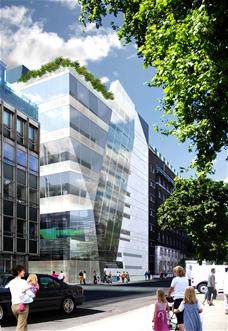 With a worldwide reputation, Great Ormond Street Hospital for Children’s new Mittal Children’s Centre needs to enhance clinical excellence, present a friendly face and put sustainability at its heart. Steve Featherstone finds out how a London landmark is changing. With a worldwide reputation, Great Ormond Street Hospital for Children’s new Mittal Children’s Centre needs to enhance clinical excellence, present a friendly face and put sustainability at its heart. Steve Featherstone finds out how a London landmark is changing.
The Mittal Children’s Centre represents the second of four phases in the long-term development of Great Ormond Street Hospital for Children, the UK’s leading tertiary care hospital. Llewelyn Davies Yeang’s masterplan will transform a congested and confusing site, accumulated over a period of 150 years, into a more legible, accessible and sustainable whole.
The second of four phases of the hospital’s long-term development plans, the Mittal Children’s Centre will provide 31,500 square metres (340,000 square feet) of modern clinical facilities.
The new buildings needed to recognise not only the normal statutory restrictions of a sensitive site (within a Conservation Area, and with strict height limitations), but to deliver an energy-efficient design, and the new development will be one of the greenest hospital projects in the UK, achieving a 20% reduction in carbon emissions through renewable sources (BREEAM rating 77%).
World reputation, world knowledge
GOSH is a world centre of excellence providing the widest range of specialist paediatric services in the UK, alongside teaching, training, and research and development, with referrals mainly from other local hospitals in London and south-east England, but also from other UK commissioners and from abroad.
The GOSH redevelopment team, working in partnership with other health providers and the design team, used evidence-based design to inform clinical and operational principles; it also consulted various institutions, visited other hospitals, studied appraisals of UK children’s hospitals and researched theoretical projects, papers and reports. Finally, by engaging children, families and staff throughout, an innovative design process emerged between
the hospital and its design team.
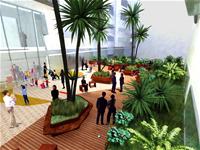 |
Light- and plant-filled courtyard areas will create a welcoming atmosphere
|
Choice, sensitivity and discovery
A family- and patient-centred approach to design was critical in order to generate a patient-responsive environment. Most of the inpatient accommodation will be in single rooms with provision for family presence, bringing added benefi ts of noise control, patient safety, and control of infection.
Each room encloses three distinct zones: the child or young person’s area, the parent area and the clinical area. Each has its own en-suite bathroom and a parent/carer is able to sleep in the room. The single bedroom allows patients to maintain privacy and offers the opportunity to personalise their space and have links through their entertainment system to other children and a school network.
Decentralised nurse stations in the cardiac intensive care unit and the inpatient bedpools will allow a close relationship between staff and children and their families by providing constant physical staff presence, without interfering in day-to-day family life.
Theatre layouts will provide a ‘double corridor’ that separates children and families from staff and supply flows, while providing individual anaesthetic rooms that allow a more private environment for patients and their families.
Patient environments and interiors are designed to stimulate discovery and patient senses, by the following means:
• Integrating interior design and arts strategies throughout the design process, in public areas and bedpools, and to assist orientation. Consultation with patients, visitors and staff is key to developing a relevant architectural response, especially for spaces adjacent to patient areas.
• Arranging bedpool zoning to facilitate discovery, with a gradual transition from public to more private zones. Public, reception, parent and play areas (for children and adolescents) overlook a landscaped green courtyard, an oasis within the densely developed hospital site that can also accommodate performances.
• A cranked block design within a tight site that maximises the penetration of natural daylight into the children’s bedrooms, reducing stress and anxiety among patients.
• An inventive restaurant interior that will seek to inspire with interactive artworks, performance and music. The space will be designed around ‘The Rainbow’, an LED-based lighting system behind a translucent ceiling to create variations in mood lighting. Externally, a double glass skin expresses the natural ventilation fl ue to the restaurant, visibly expressing the environmental aspirations of the hospital.
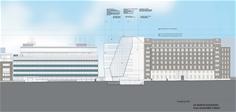 |
The north elevation of the Mittal Children's Centre, showing its relationship to the existing hospital buildings
|
A nurturing environment
Rethinking hospital design has been an occupational imperative for architects in the UK during the last 50 years. The hospitals that have emerged have been in response to a series of design priorities – functionality, fl exibility, low cost – that have prescribed formulaic design outcomes. By contrast, the recent wave of Private Finance Initiative (PFI) buildings has seen hospital trusts wanting to create a sense of identity, often demanding buildings with ‘corporate’ individuality.
At the heart of GOSH’s development plan was the desire to create a healing environment based on sustainable resources, fully accessible to children and their families, staff and visitors. In the design of the Mittal Children’s Centre, Llewelyn Davies Yeang has sought to deliver a world class, signature, ‘deep green’ building and environment that recognises concerns including patient privacy and dignity, improved infection control and energy efficiency.
Author: Steve Featherstone is managing director of Llewelyn Davies Yeang.
|

1.1.jpg)




|