Elderly Care: Designed to Last
The fastest growing segment of the world’s population is still the least catered to in terms of their specific life stage requirements. Veronica Simpson investigates.
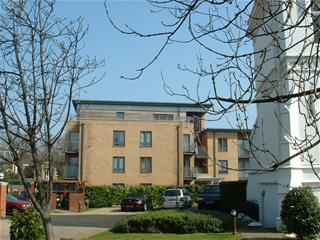 |
| Designed by Hunters, this extra-care scheme sits alongside a high-quality, private development scheme called Queen Charlotte’s Hospital in London, UK. The quality of the materials and detailing of the balconies is the same standard as the private apartments |
Dignity, privacy and community are three of the key quality-of-life indicators for the world’s over-70s, whether they are living independently or needing a greater degree of care. Yet the extent to which any of these elements are present in their lives, once their ability to look after themselves is compromised by ill health, is still hugely dependent on income and geography.
The US has long encouraged its seniors to relocate to vast and well-appointed retirement communities where state-of-the-art leisure and medical facilities create a haven for the elderly, whatever their mental or physical condition. In the UK, however, ‘confused and fragmented’ describes not just a state of mind but also the state of elderly healthcare as a whole.
In part exacerbated by the multitude of care providers – social services, NHS, private sector – there has been little in the way of coherent thinking as to how best to house and care for older people in the long term.
The reasons for this situation are varied. First, the cultural perceptions of care for the elderly in the UK are that the state will provide – unlike in continental Europe where it is still seen as the duty of younger family members. Despite this, not enough public money has been invested in elderly provision, compared to other EU countries. What’s more, little attention has been paid by the public sector to the kind of environment in which elderly people would choose to live. As one consultant said: “It’s there in the private sector, if you can afford it.”
But hard facts are beginning to raise awareness; the cost of social care for the over-65s in the UK is currently estimated at £10.1bn per year. By 2026 that’s set to rise to £24bn to meet the demands of the over-75s – a population that is predicted to increase by 76% over the next 25 years. Enlightened new public and private residential schemes are starting to include housing for people at all stages of their lives, including the elderly, and offering adapted ‘extra care’ dwellings in their midst. There’s a growing understanding that by keeping families, neighbours and friends close a more pastoral pattern of care can be accessed that enhances quality of life and eases strain on the system.
Design quality
However, the quality of architecture in new-build extra care or sheltered accommodation often leaves much to be desired, according to Sue Magyar, director at Hunters: “A lot of them are designed around what people feel older people like, which is usually pastiche architecture: small windows, pitched roofs, dormers, almost chocolate-box architecture.”
Hunters recently designed an extra-care scheme that sits alongside a high-quality, contemporary private development scheme called Queen Charlotte’s Hospital in London in which the quality of the materials and detailing of the balconies is the same standard as the private apartments. “The extra-care apartments are all two-bedroom (very unusual). There’s a doctors’ surgery, with between 8 and 10 GPs and a communal lounge, dining room and bar. Standards are improving,” Magyar says.
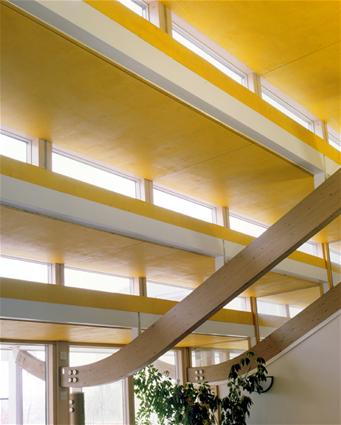 |
Welcoming at colours at the Penoyre + Prasad designed Newhaven Downs House in Sussex, UK, helps residents to feel less confused and stressed
|
If the quality of planning and accommodation for the elderly within the community is slowly improving, so is the thinking behind the design and interiors of elderly healthcare buildings. Penoyre + Prasad’s two mid-1990s projects in Lambeth and Newhaven placed strong emphasis on wayfinding and orientation, through colour, texture, light and touch. “When designing for people with dementia it’s really important that you don’t create opportunities for rage and frustration when they get lost,” comments Greg Penoyre. “You can help people distinguish between rooms where you are welcome as a resident by giving them door handles that feel pleasant and smooth to the touch and painting them welcoming colours. You put loops into the plan so that people’s tendency to wander isn’t thwarted. Corridors never lead to a dead end. And gardens have to be really easily seen – they have to be the other half of the ‘wandering loops’ and they have to be secure.” As a result of these initiatives, says Penoyre, “death rates went right down and visitor numbers went right up”.
A range of multi-sensory orientation and wayfinding tools have now become the norm. Nightingale Associates’ £17m Darlington West Park development in County Durham, finished in 2005, was able to harness an extensive art programme for the whole site that focused on a handful of key sculptural and decorative motifs that were then carefully deployed across the whole range of buildings to enhance orientation and wayfinding, as well as aesthetics. “Everything was oriented around a central sculpture at the heart of the development,” says Rowland Phillips, project architect. All the buildings were T-shaped and interlinked, creating secure courtyards for each building and therefore minimising the need for fencing.”
Watkins Gray International is half-way through the construction of a new mental health and elderly care facility in Northamptonshire which incorporates many of the above practices and builds on them. It is currently being viewed as something of an exemplar (see case study).
Pendered Centre, Northamptonshire, UK
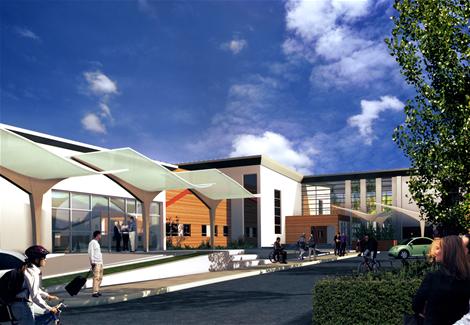
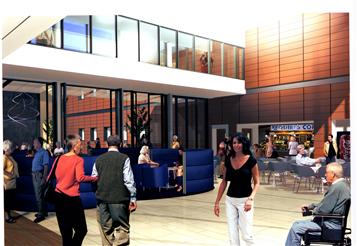
The Pendered Centre project will provide facilities for dementia and acute conditions and comprises 135 continuing care beds in single ensuite rooms plus a day hospital and low secure unit. WGI formulated a ‘zonal’ approach, where patients can access mental health services specifically designed for their needs, yet which link into other areas, to provide a sense of community and shared experience. Chris Grayson, WGI associate and healthcare sector manager, says: “We have created a village concept based around elderly respite care, day care and continuing care for younger adults and elderly adults with acute and psychiatric care. There are shared spaces at the heart of the project, with catering, entertainment and leisure facilities that we also hope the local residents and visitors will enjoy. The purpose is to increase socialisation and encourage participation from non-patient visitor groups.” There will be six courtyards each designed to refl ect which group will be using it or looking out on it, as well as wandering routes. The interior design scheme is based around different elements to assist with orientation.
Client: Northamptonshire NHS Trust
Architect: Watkins Gray International
Project type: PFI
Schedule: Phase one completed December 2008,
with Phase II scheduled to complete in May 2010
Cost: £135m
Construction: Balfour Beatty |
|
Best practice in the US
Anshen + Allen has been working on some encouraging public facilities for the elderly in California, which do much to provide dignity, privacy and community for a range of lower-income patients requiring long-term care, including the elderly. Senior principal Sharon Woodworth and her team, working across Laguna Honda Hospital and Edgmoor Skilled Nursing Facility, took great pains to create massive healthcare facilities which give patients a choice as to how much or how little they want to mingle with the surrounding patient neighbourhoods.
Laguna Honda caters for the full range of acutely ill and severely disabled populations of all ages, from coma patients to dementia patients requiring long-term care. Inserted into maturely planted landscape between two hills on the existing historic facility, the link building is based on a horizontal layering of spaces which will house whole hospital facilities, but provide easy navigation between old and new facilities.
One of the principal challenges for the architects was breaking down the 1200-bed facility into manageable spaces that could somehow feel as domestic as possible, given that some patients will be living out the rest of their days there. “We broke it down into neighbourhoods and households,” Woodworth explains. “Each household has 15 bedrooms and four households come together to create a 60-bed neighbourhood.”
There are 20 self-contained neighbourhoods around the facility, each with their own dining and living facilities. Bedrooms may be shared with one or two others, with curtains separating the beds. Bedrooms for three residents have private sleeping suites with sliding screens instead of curtains and each suite shares a bathroom. The beginning and end of each neighbourhood is reinforced by the architecture and artwork. There are walls where the staff might have preferred a continuation of corridors but Woodworth insists endless corridors should be avoided at all costs. A full range of sensory cues maximise recognition of neighbourhoods and households, chosen to suit the particular patient household.
Anshen + Allen’s designs for the 192-bed long-term Edgmoor Skilled Nursing Facility maximised the power of gardens and the healing landscaping, with three blocks of patient spaces staggered to provide natural seclusion and security. Each block has three two-storey wings of patient rooms. The fourth wing is the shared space. Woodworth says: “The fourth wing has accessible terraces so the patient can choose to be outside or sit inside and see what’s going on. When people are in this space they can appreciate a beautiful alignment with nature and greenery.”
The transition from public to private space is clearly signalled by the solid corridors and wings of patient rooms and the feeling of privacy is further reinforced from bedroom to common room. “There are three hallways facing one intersection – an interaction intersection with a skylight, focusing on those corners where the three corridors come together. Once they are in that corner, they can see into the fourth wing. It’s fully open.” This level of attention to detail is intended to minimise stress and maximise choice and engagement within the patient community.
Another US giant that has done much to evolve the practice of elderly healthcare architecture, Perkins Eastman, has long flagged up the benefits of creating more defined, personal spaces for care homes by breaking accommodation down into 10-bed households and ditching the nursing station – integrating all the necessary facilities and equipment into the communal kitchens. It has further developed the array of cueing components to facilitate wayfinding and orientation for those with memory impairments, including variations in flooring – wood, tile, carpet – wall coverings, acoustics and lighting, and the invention of ‘memory boxes’, which can be placed at the entrance to each room and feature a significant photo or object chosen by the resident themselves.
West meets east
Recently Perkins Eastman has been transferring the US model of luxury retirement communities from the US to Japan. David Hoglund, principal and CEO, says: “Japan is probably on the leading edge of what we are seeing happening now. There’s been a huge cultural shift. Retirees are not retiring at 62 with the prospect of moving in with their children. They want to be off playing golf and enjoying life. “In the US [where the average age in a retirement community is between 78 and 82] it’s more needs-driven. Here it’s a lifestyle choice, and that’s partly because the typical residential housing in Japan is not very accessible.” Hoglund adds: “People get to a point where their knees or hips ache, and they want to live in a more accessible community with access to great dining and leisure.”
The Perkins Eastman-designed 480-bed Sun City Park in Yokohama is split into two blocks, or ‘villages’, each with its own character and facilities. One village focuses on leisure and culture, with musical and theatrical events regularly staged at Sun City Hall, and the other has extensive health and fi tness facilities, including a beauty spa and swimming pool. The two villages are linked by a bridge over the stream, providing a charming and formal ‘welcome’ to each area.
A second project designed by Perkins Eastman, Sun City Ginza, offers 31 storeys of residential and leisure facilities – one of the very fi rst high-rise retirement community buildings. A six-storey podium base is capped with a 26-storey high tower. The podium is made up of two levels of public space at the street, with 134 units of nursing-specific floors above. Double- and triple-height spaces at either end of the base provide a dynamic presence at the street, as well as serving to tie together the living environments. The tower offers 276 independent living apartments on 24 floors and is topped by the two-storey Harborview Restaurant and Ginza Bar. The interiors and furnishings are geared towards being as uninstitutional as possible, while allowing for reduced mobility. “The client’s background is in hotels, retail and hospitals,” says Hoglund. “These places are all about service.”
Back in the US, Perkins Eastman is currently at work on several retirement community projects which are specifically weaving in opportunities for wider social engagement, one of the most interesting being New Bridge on the Charles River in Massachusetts. Designed by Perkins Eastman and Chan Krieger, it’s an intergenerational campus for Hebrew SeniorLife. Located on 153 acres of land along the river, it will include a 100-pupil children’s day care centre, a Jewish K-8 day school for 450 students, a summer camp, a Jewish community centre, a 268-bed long-term care facility (220 long-term care and 48 sub-acute), 51 assisted-living apartments, 182 independent-living apartments, 24 villas and 50 cottages.
Wexford Creek Campus of Care, Canada
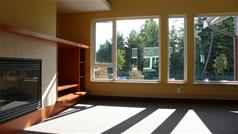
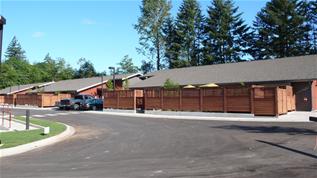
Good Samaritan Canada’s new facility in Nanaimo, British Columbia offers a continuum of care in three distinct types of accommodation (independent-living apartments, complex care and mental health cottages) for residents on one site. The project was developed on a brownfi eld site with stringent requirements for storm water management and a naturalised riparian setting for the facility, which is currently undergoing restoration. The independent-living component of the campus includes 40 self-sufficient apartment units. All units are fully wheelchair-accessible and are designed to ensure residents with a variety of abilities can live independently. The campus also accommodates 80 complex-care beds organised into 8-10 bed units. The plan is organised around private courtyard gardens with the more transparent common rooms at each end allowing residents safe access to a protected outdoor space which is readily observed by staff and volunteers. The third accommodation type on the campus is located in the cottages which house up to 10 residents with varying degrees of dementia within an intimate residential setting.
Client: Good Samaritan Canada
Architect: Stantec
Cost: CDN$30.5m
Completion: 2008 |
  |
With such a breadth of choice of elderly-friendly accommodation and a community remit to foster intergenerational support, we can only hope to see more models like this becoming the norm worldwide.
Veronica Simpson is an architectural writer
|

1.1.jpg)






|