Dementia Care: Determining an environmental audit tool for dementia-specific research
A critical examination of the validity of a range of auditing tools for their effectiveness in assessing the physical environment of dementia facilities.
Ian Forbes, Richard Fleming
This study was undertaken in parallel to a major dementia study and was used to determine the validity of a tool for auditing the physical environment in dementia facilities. The major research project is titled Person-centred Environment and Care for Residents with Dementia: a cost-effective way of improving quality of life and quality of care?
 |
Residents enjoy tea and cakes at the Bangalor aged care facility in Tweed Heads, New South Wales, Australia
|
With a working title of ‘PerCen Study’, the project was approved for three years’ funding by the Australian National Health and Medical Research Council. The team was predominantly from the University of Technology Sydney, but with participation also from the Universities of Sydney, New South Wales, Wollongong and the Australian National University.
The project was based on previous work in both person-centred care and person-centred design by the researchers involved. They were:
a. Dr Lynn Chenoweth, Prof Henry Brodaty, Prof Madeleine King, Dr Yun-Hee Jeon and Prof Jane Stein-Parbury, who tested the efficacy of person-centred care in improving care delivery for aged care residents with dementia, staff’s attitudes and approaches to care, and improving the health and well-being of the residents;
b. Chanel Burke, Dr Lynn Chenoweth, Dr Yun-Hee Jeon, and Prof Jane Stein-Parbury, who are developing and validating a person-centred measure of the dementia care environment and care delivery;
c. Richard Fleming and Prof Ian Forbes, researching the identification of the essential principles in designing environments that help maintain the abilities of people with dementia and make for more effective care delivery;
d. Richard Fleming, who has developed a validated measure of the person with dementia’s emotional responses as an indicator of quality of care; and
e. Dr Victoria Traynor and Chanel Burke who are undertaking dementia nursing care competency research.
The aims of the PerCen Study were to determine: the effect of providing person-centred care (PCC) on the quality of life (QOL) and quality of care (QOC) of aged care residents with dementia; the effect of modifying the physical dementia care environment (person-centred environment design (PCD)) on the QOL and QOC of aged care residents with dementia; the combined effect of PCC and PCD on resident QOL and QOC; the effect of PCC on quality of care for residents with dementia; and the costs of PCD and PCC, and undertake an economic evaluation.
Justification for the project
The progressive nature of dementia leads to a significant reduction in capacity for self-care and self-determination, which are essential features of QOL. Kitwood’s social-psychological theory of personhood1 challenges the notion that dementia must inevitably be characterised by decline, disintegration and despair, even though there is continuing decline in brain function.
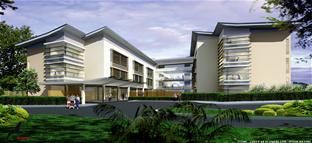 |
| The Amity Aged Care facility at Sutherland Hospital in Sydney |
The theory posits that ill-being, or poor QOL, may result from negative contextual stimuli, including physical environments that lack cues to orient the person to their present reality, and care practices that disregard ‘personhood’ by denying opportunities for making choices and decisions1,2.
An important aspect of this study is the ability to determine the effects of the PCD interventions in comparison with, and separate from, the effects of PCC. Usually such research is not able to distinguish the effect of the environment from changes in staff interventions3.
Person-centred care is distinguished by care staff making genuine efforts to understand and meet the person’s individual needs. This means ensuring they gain a sense of place and belonging and providing emotional and physical security. Personhood is achieved when staff respect the person’s individuality, make contact with the person in order to understand their present world and give them recognition, respect and trust4,5,6.
Thus PCC improves the person’s QOL by helping them to feel valued for who they are, rather than being known for their disease.
Kitwood suggests that evidence of PCC is through a decrease in their ill-being and psychological symptoms of dementia, such as agitation, aggression and perseveration experienced by the person with dementia, and an increase in their well-being and QOL1,2.
The study will identify if this is the case in sites where PCC and PCD are introduced. There are direct links between QOL for persons with dementia and physical space7, whereby the physical environment serves as a non-pharmacological supportive element in retaining memory8,9, stimulating the remaining senses, enabling communication with carers, assisting the person to retain self-control10,11 and reducing levels of anxiety, aggression, depression and psychotic behaviour, through built ‘cues’12,13,14. PCD environments improve or slow the decline in residents’ communication skills, self-care skills, social function, mobility and affective responses8,15.
The physical environment can, therefore, exercise dramatic psychological impact on QOL for the person with dementia as they lose the capacity to achieve the human needs of comfort and familiarity – for example, recognition of familiar objects helps the person to understand the sensory input they get and helps provide a sense of place16. The study will identify if PCD indeed supports both QOL and QOC.
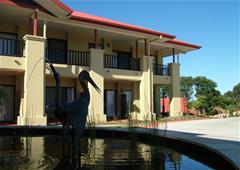 |
External view of Bangalor Retreat aged care facility at Tweed Heads, New South Wales, Australia
|
Research methods
It was determined that a factorial group-randomised cohort study with stratification was the only feasible design. Because we were interested in the main effects of PCC and PCD, individually and jointly, we determined to use a factorial design. Previous studies indicated considerable correlation within individuals over time (range 0.6-0.7), so a cohort design (pre-test, post-test and follow-up) would increase the power of the design.
Stratification would be used to ensure balance across treatment groups in geographical locales and by type of facility (private for profit, private not for profit); this would allow us to test whether the effects of PCC and PCD differ across strata, which is an important issue for facilities development. Residential aged-care sites that show minimal (less than 15%) evidence of providing PCC or PCD at baseline would be randomised to one of four treatment groups.
In addition, the two treatment factors would each have two levels.
Person-centred care (PCC) Level 1: person-centred care delivery according to Kitwood’s care principles (PCC)1; and Level 2: usual (non-person-centred) care (UC).
Environmental design (PCD) Level 1: adjustments to spatial configurations employing Kitwood’s principles1 for person-centred dementia environment design (PCD); and Level 2: usual (non-person-centred) dementia environment design (UD).
The factorial design would give four treatment groups: PCD+UC, PCD+PCC, UD+PCC, and UD+UC as the control group. Ten sites have now been allocated at random to each group. Stratifi ed random sampling was used to ensure an equal distribution across the four treatment groups by geographical location and by type: private for profit, private not for profit. In Australia, public funding for eligible aged care recipients is delivered primarily through private providers.
Residents with dementia, their nominated proxy (frequently visiting family/friend) and care staff were recruited from these 40 care sites. The essential elements of the two aspects of the study are outlined below. Due to limited funds within the grant, only minor modifications to the environment in each of the 20 sites would be undertaken to reduce the worst of the physical environmental effects.
Facility selection
In order to reduce the number of facilities that volunteered – from 64 to the 40 needed for randomisation – an evaluation instrument was chosen that combined both person-centred care and person-centred environments having both elements scored in the same evaluation. This was called the Person-Centred Environment and Care Assessment Tool (PCECAT). This tool was not sufficiently robust to undertake the assessments for determining the PCD interventions at the assigned aged-care facilities, but was useful for this initial selection. The PCECAT was developed independently by researcher Chanel Burke as a self-assessment evaluation instrument to assist managers and staff of residential aged care homes to conduct evaluations of care practices and the supportiveness of the environment in a home.
With respect to the PerCen Study, the initial overall evaluation of the facilities was intended to provide a single ranked score covering both aspects (PCC/PCD) for each facility in order to determine which facilities were already well advanced with implementing PCC or had sufficiently supportive environments.
It was our intention to eliminate the best and retain the worst of the facilities as the interventions were hypothesised to improve these poor situations. The PCECAT consists of three sections:
Section A: characteristics of the home that address information relating to the main features of the home.
Section B: the three domains which assess care practices and the environment of the home. These domains include: organisational culture (Domain 1); care, activities /interaction/relationships and interactions (Domain 2); and the physical layout and design of the home (Domain 3).
Section C: an opportunity to use the tool as a means for staff to develop strategies to improve care practices and the environment.
The domains in the tool were based on a set of guiding principals that met the requirements of the Australian Accreditation Standards identified for that specific domain17.
Each of the 64 facilities was assessed according to the PCECAT tool. The scoring used in the tool rated the extent of having begun implementing PCC and PCD at each facility. This score required five values for the issues under consideration, from 0 (not even considered) to 4 (fully implemented).
On receiving the results, it was difficult to determine at the margin which facilities should be eliminated, based on whether there was any room for improvement and therefore worthy of inclusion. To assist with this decision, the ratings of PCECAT was modified to a rating which identified room for improvement (RFI) scores (see Table 1).
The result generated 38 units poor enough to include as they had suffi cient room for improvement. It then required the inclusion and assessment, using RFI, of additional facilities from the reserve list to provide the 40 facilities needed for randomisation.
Evaluating audit tools
Once the randomisation had been completed, the PCD evaluation of all 40 facilities could be undertaken to establish a base condition prior to interventions in 20 of the aged-care homes. In selecting a tool for measuring what interventional changes would be necessary in a facility, an examination of the various tools used internationally was conducted.
In 2006, Cutler, Kane et al, undertook a similar study of 1,988 nursing homes in the US and developed a tool to do this work18. It was felt, however, that this instrument was too broad for our purposes as it included many aspects of nursing homes that would not be suitable for dementia-specific units and had different objectives in its measurements.
However, similar to their study, we also assessed the three tools most internationally recognised for nursing home assessments that include dementia-specific units. The tools examined were the Multi-phasic Environmental Assessment Procedure (MEAP)19, the Therapeutic Environmental Screening Scale (TESS+)20,21 and the Professional Environmental Assessment Protocol (PEAP)22.
The Cutler and Kane review18 showed that the MEAP was a most comprehensive instrument consisting of a battery of five major rating instruments, each with subcomponents covering the broadest definition of environment. While the MEAP has been described as “the most established instrument”21, it has only one component dedicated to physical and architectural features dealing with the physical environment.
The scales of this component were designed to assess planned residential environments for older people, ranging from congregate housing to nursing homes. The objectives of the PerCen Study were much narrower and intended to cover a smaller residential unit for people living with dementia.
While MEAP does partly cover this aspect, it is a very detailed assessment which is not suitable for use by non-researchers, its scoring was considered biased toward larger, more institutional settings19 and it does not include aspects of the physical environment in dementia-specific facilities considered by the PerCen Study team to be essential.
In addition, a literature review showed it now appears to have fallen into disuse in dementia-specific research and doesn’t reflect current research in dementia care – so, it was rejected. Many of the issues of MEAP were addressed in the Therapeutic Environmental Screening Survey (TESS-NH)21 being the latest version of the instrument after several modifications.
The modifications had come about because the original 12-item instrument (TESS) developed in the late 1980s for briefly screening nursing home special care units used for Alzheimer’s disease, became the TESS+2 adjusted for use in the American National Institute on Aging project for the evaluation of special care units (NIA SCU) that commenced in 1991. It was as a result of the NIA study that adjustments occurred to become the TESS-NH, previously called a ‘scale’ but now called a ‘survey’.
The TESS+2 was created to address six consensus goals used to evaluate the physical environments in long-term care facilities while the environment was to be assessed under eight environmental domains20. The modifications that produced the TESS-NH included condensing categories where 85% of responses fell into a single-response option, essentially because of the lack of their variability and those options with fewer than 5% responses were simplified21.
Importantly, embedded within the TESS-NH is the selection of 18 item scores into a special care unit environmental quality scale (SCUEQS). The SCUEQS consists of scores that were demonstrated to have the following properties in the NIA SCU studies: a correlation above 0.20 with global ratings of environmental quality by project data collectors; adequate inter-rater reliability; and adequate item variability.
This current TESS-NH scale now contains a series of 13 domains of discrete items including one item that covers all domains. Scoring is required for each item in the domain, many are dichotomous scores for yes or no and others have gradation with 0 (none) to 3 (most acceptable). Only the thirteenth domain, covering an opinion of the overall physical environment, has a Likert scale with a low score of 1 and a high score of 10.
In addition to TESS-NH the Professional Environmental Assessment Protocol22 was evaluated. The PEAP consists of a five-point rating of nine dimensions, each of which represents a desired outcome of ‘quality’ environments. Each dimension is defined, with an expanded conceptual discussion of its meaning, followed by a rater’s guide as to what to observe and inquire about at the time of the walk-through. In terms of its application, the time taken to complete the PEAP during a validation study was 45-90 minutes. However it has also been described as requiring a ‘several-hour visit’ for completion21.
The relationship between the PEAP and an earlier version of the TESS was shown to be strong, with a correlation of 0.55 between the PEAP total scores and the SCUEQS and a multiple correlation of 0.89 between all TESS items and the PEAP total score22. The correlation between the TESS-NH and the PEAP was found to be similar23.
When SCUEQS scores were compared with independently conducted expert assessments using the PEAP in 44 SCUs, the correlation between the global PEAP assessment (a five-point scale) and the SCUEQS was moderately strong (r=0.52, p<0.01), and the correlation between the global PEAP scores and the TESS-NH global rating item was very strong (r=0.68, p<0.01).
In considering our uses for the tools, the PEAP requires a sophisticated and experienced rater able to devote a considerable amount of time to the assessment. The TESS-NH yields results that correlate well with the PEAP, takes half the time and can be used by a research assistant after eight hours of training21. So the TESS-NH has a practical edge over the PEAP.
However, the TESS-NH has some severe limitations. While the 84 items cover a wide variety of relevant environmental features, they do not combine to form a single scale and therefore do not enable a simple summary of the quality of the environment to be obtained. This is left to a single item with a global rating scale within TESS-NH. It was felt that such a simplistic approach on one scale was not useable when compared to the other systems with accumulated scores, and similarly with the much less than comprehensive SCUEQS.
The SCUEQS score does tell us a little more by ensuring that equal weight is given to a comprehensible number of defined items. However of the 18 SCUEQS items, four deal with maintenance matters, three with cleanliness and two with odour from bodily excretions, i.e. 50% of the scale is of dubious relevance to the specific care of people with dementia as it is understood in the Australian context12 or as described by the accumulated research evidence described above.
An alternative scale
The question then arises as to whether or not there are assessments better suited to understanding environments for people with dementia than is current in Australia. In order to consider an alternative scale it would need to meet similar criteria to be considered more appropriate than the TESS-NH.
A tool selected to compare with TESS-NH was the most recent version of the Environmental Audit Tool (EAT) developed in a NSW Department of Health project on adapting wards in small, regional hospitals for long term use by people with dementia14.
The EAT comprises 72 items that have been selected to exemplify a set of design principles first used in the development of the units for the confused and disturbed elderly (CADE) built by the NSW Department of Health in the late 1980s and early 1990s24,25.
This scale was extended, as described in the Department’s Adapting the Ward manual14. The items are grouped by the 10 principles in which the environment should:
1. Be safe and secure
2. Be small
3. Be simple with good visual access
4. Have unnecessary stimulation reduced
5. Have helpful stimuli highlighted
6. Provide for planned wandering
7. Be familiar
8. Provide opportunities for a range of private to communal social interactions
9. Encourage links with the community
10. Be domestic in nature, providing opportunities for engagement in the ordinary tasks of daily living
In this tool the items are not uniformly spread across the groups. The principle of smallness is covered by a single question on size while the largest group of questions (14) deals with safety and security features. The majority of questions are answered either ‘yes’ or ‘no’; some have a ‘not applicable’ option; and some provide for extra points in certain circumstances, for example, if the safety feature is unobtrusive. Each principle is considered to be a subscale with a score expressed as a percentage of the available score to ensure that all subscales have equal weight. The total score is the mean of the subscale scores.
Comparing EAT with TESS-NH
In order to compare the characteristics of the two scales, a separate study in parallel to the PerCen Study was undertaken specifically to validate the EAT scale using a sub-sample of the facilities involved in PerCen. In doing this a sample size of 30 facilities was considered to be adequate, on the assumption that the inter-rater reliability of the EAT would be close to that obtained with the SCUEQS, i.e. an ICC of 0.9321.
The appropriate sample size was initially determined by reference to the graph provided by Streiner and Norman26 and later checked by the application of the formula provided by Walter to optimise the number of observations required in inter-rater reliability studies27. This indicated that a sample of 18 would be sufficient at a power of 80% with an expected ICC of 0.93. The sample of 30 facilities therefore provided a safety margin in case the inter-rater reliability of the new tool was lower than that of the TESS-NH.
Two raters were employed for the observations. One had many years of experience as a consultant on the care of people with dementia and had been involved in many design exercises. The other was a first-year PhD candidate with a degree in psychology. They were provided with the three assessments and supporting manuals and spent three hours reading them and in discussion with one author. They then assessed two facilities not included in the sample in collaboration, discussing the interpretation of questions and the method for completing the tools. The results of these assessments were fed back and there were few disagreements.
Where there were disagreements these were discussed with the author and a consensus determined. The training process took approximately eight hours. The raters then visited the sample of 30 facilities over a period of six weeks. The order of assessments was varied at each visit to control for the contamination of one assessment tool by the provision of information from another tool. The raters worked independently in each facility, helped by a staff member who identified the boundaries of the unit and provided them with access to the required areas. The completion of the three assessments took between 1.5 and 2.5 hours.
The six-week period included a break for Christmas. The raters refreshed their memory of the instructions for the assessments by re-reading the manuals after the break. Data were entered into SPSS 17 for analysis. The level of inter-rater reliability was calculated using the intra-class correlation coefficient for both categorical and quantitative data following the recommendations of Fleiss and Cohen28 who found that the ICC and weighted kappa are equivalent. The ICCs reported here are therefore comparable to the weighted kappas reported in the TESS-NH validation study21.
Results
The reports on the previous studies21 on the validity of the TESS-NH, shows the average percentage of agreement between two raters was 86.7 (range 41.7% to 100%). Pearson correlation coeffi cients for continuous variables ranged from 0.33 to 1.0; kappas ranged from 0.13 to 1.0; seven items had kappas less than .40; and the majority (two-thirds) were greater than 0.70. The inter-rater reliability of the SCUEQS was 0.93. Cronbach’s alpha was not calculable for five of the sub-groupings; two of Cronbach’s alphas were below the usually accepted level of 0.6 and five were above.
In the present study using the TESS-NH, the average percentage of absolute agreement between the two raters was 84.4% (range 43% to 100%). Pearson correlation coefficients ranged from -0.11 to 1.0. Three items (doors to rest of facility disguised, cleanliness of social spaces and visibility of signs from resident rooms) had negative correlations; however the latter is a dichotomous variable.
ICCs ranged from -0.07 to 1; 18.1% of items had ICCs of less than 0.4 and 39.8% of the ICCs were greater than 0.70. The inter-rater reliability of the SCUEQS was 0.84. Four of the subscales have a Cronbach’s alpha below the usually acceptable level of 0.6, two were not calculable and seven were above the acceptable level.
The average percentage of absolute agreement between the two raters using the EAT was 80.2% (range 53% to 90%). Pearson correlation coefficients ranged from -0.05 to 1.0. One item (artificial lighting bright enough) had a negative correlation. ICCs ranged from -0.05 to 1; 13.8% of items had ICCs of less than 0.4 and 54.2% of the ICCs were greater than 0.70. The inter-rater reliability of the total score was 0.97. Two of the subscales (‘highlighting of helpful stimulation’ and ‘familiarity’) have a Cronbach’s alpha below the usually acceptable level of 0.629.
Conclusion
The TESS-NH was developed in the US in the early 1990s before much of the useful literature on environmental design was published. It reflects a rather institutional approach to the residential care of people with dementia and does not capture the person-centred, small-scale, domestic philosophy of care that has informed developments in Australia and the UK30. The EAT has been developed within that philosophy and informed by the recent literature. However, their currency and relevance does not guarantee their psychometric qualities.
The item-by-item inter-rater reliabilities of the scales are very similar. The average level of absolute agreement between raters across all items is 84.4% (TESS-NH) and 80.2% (EAT). The inclusion of a ‘not applicable’ category in many of the EAT questions appears to have reduced the maximum level of absolute agreement to 90% by providing a rater with the opportunity to opt out of making a judgement rather than forcing a judgement to be made. On the other hand, it may have contributed to the EAT having the highest minimum level of absolute agreement (53%) against 43% for the other scale.
The intra-class correlation coefficient of the items has a greater spread with 39.8% of TESS-NH items having an ICC in excess of 0.7, and 54.2% of EAT items. It must be noted that the Australian TESS-NH raters did not achieve the same level of agreement as the original TESS-NH raters in that the originals achieved kappa scores in excess of 0.7 for two-thirds of the items.
In all scales there were instances of negative correlations (three in TESS-NH, and one in EAT). Whether this was due to a disagreement about the meaning of the questions or differences in conclusions based on observation is not known. It should be noted that the original TESS-NH ratings included one with a zero correlation. Neither of the scales achieved the desired standard of having all of the subscales reach the benchmark of internal consistency, i.e. a Cronbach’s alpha of 0.6. Seven of the 13 TESS-NH scales achieved this and eight of the 10 EAT scales.
The low Cronbach’s alphas in the ‘highlighting of helpful stimulation’ and the ‘familiarity’ subscales of the EAT have been improved by eliminating items that have zero variance or low correlations (0.2 or below) with the subscale totals. This reduced the ‘highlighting’ scale to five items with a Cronbach’s alpha of 0.6 and the ‘familiarity’ scale to three items with an alpha of 0.62. All subscales in the EAT now have acceptable internal consistency.
In the final analysis the EAT audit tool, as adjusted, provides an acceptable alternative to the TESS-NH that is quick and easy to use, valid and reliable and arguably a better measuring instrument. It also reflects the current environmental requirements described in the international literature for dementia residences. For the PerCen Study it promises to provide a tool capable of determining the interventional requirements for each facility and an understanding of what interventions are likely to achieve when improving person-centred environment design – an important objective of the study.
Acknowledgements
This project was supported by a grant from the Primary Dementia Collaborative Research Centre, University of New South Wales (UNSW), as part of the Australian Government’s ‘Dementia: A Health Priority’ national initiative. We are grateful to HammondCare, as represented by the UNSW Dementia Collaborative Research Centre 2007, to support from DesignInc and the Australian Government through the National Health and Medical Research Council. Many thanks to the PerCen Study research team, especially Professor Lynn Chenoweth as chief investigator, Professor Madeleine King and Georgina Luscombe for the PCECAT statistical analysis.
Authors
Ian Forbes is director of health at DesignInc Architects and adjunct professor, Faculty of Design, Architecture and Building at the University of Technology Sydney.
Richard Fleming is director of the Dementia Services Development Centre, HammondCare and clinical associate professor, Faculty of Health and Behavioural Sciences at the University of Wollongong.
References
1. Kitwood T. Dementia Reconsidered: The person comes first. Berkshire UK: Open University Press; 1997.
2. Kitwood T, Bredin K. Towards a theory of dementia care: personhood and wellbeing. Ageing and Society 1992; 12:269-287.
3. Sloan PD, Mitchell CM, Preisser JS, Phillips C, Commander C, Burker E. Environmental correlates of resident agitation in Alzheimer’s disease special care units. Journal of American Geriatrics Society 1998; 46:862-869.
4. Brooker D. Person-centred Dementia Care: Making services better. London: Jessica Kingsley Publishers; 2007.
5. Edvardsson D, Winblad B, Sandman PO. Person-centred care of people with severe Alzheimer’s disease: Current status and ways forward. Lancet Neurology 2008; 7(4):362-367.
6. Loveday B, Kitwood T. Improving Dementia Care: A resource for training and professional development. London: Hawker; 2000.
7. Torrington J. What has architecture got to do with dementia care? Explorations of the relationship between quality of life and building design in two EQUAL projects. Quality in Ageing 2006; 7(1):34.
8. Zeisel J, Silverstein NM et al. Environmental correlates to behavioral health outcomes in Alzheimer’s special care units. The Gerontologist 2003; 43(5):697.
9. Zeisel J, Raia P. Nonpharmacological treatment for Alzheimer’s disease: A mind brain approach. American Journal of Alzheimer’s Disease and Other Dementias 2000;15(6):331-340.
10. Cleary TA, Clamon C et al. A reduced stimulation unit: Effects on patients with Alzheimer’s Disease and related disorders. The Gerontologist 1988; 28:511-514.
11. Cohen-Mansfi eld J, Werner P. Environmental influences on agitation: An integrative summary of an observational study. American Journal of Alzheimer’s Disease and Other Dementias 1995; 10(1):32-39.
12. Judd S, Marshall M et al. Design for Dementia. London: Hawker; 1998.
13. Marshall M. Environment: How it helps to see dementia as a disability. The Journal of Dementia Care 2001; 6(1): 15-17. S. Benson,
14. Fleming R, Forbes I et al. Adapting the ward for people with dementia. Sydney: NSW Department of Health; 2003.
15. Morgan DG, Stewart NJ. The importance of the social environment in dementia care. Western Journal of Nursing Research 1997; 19(6):740-761.
16. Reimer MA, Slaughter S et al. Special care facility compared with traditional environments for dementia care: A longitudinal study of quality of life. Journal of the American Geriatrics Society 2004; 52(7):1214-15.
17. Aged Care Standards and Accreditation Agency. Results and processes in relation to the expected outcomes of the Accreditation Standards. Paramatta, Australia: Aged Care Standards and Accreditation Agency; 2005.
18. Cutler LJ, Kane RA et al. Assessing and comparing physical environments for nursing home residents: Using new tools for greater research specificity. The Gerontologist 2006; 46(1):42-51.
19. Moos RH, Lemke S. Multiphasic Environmental Assessment Procedure (MEAP): Manual. Palo Alto CA: Social Ecology Laboratory, Veterans Administration, and Stanford University Medical Center; 1984.
20. Sloane PD, Mathew LJ. The Therapeutic Environment Screening Scale. American Journal of Alzheimer’s Care and Related Disorders and Research 1990; 5(6):22-26.
21. Sloane PD, Mitchell CM et al. The Therapeutic Environment Screening Survey for Nursing Homes (TESS-NH): An observational instrument for assessing the physical environment of institutional settings for persons with dementia. Journals of Gerontology Series B-Psychological Sciences & Social Sciences 2002; 57(2):S69-S78.
22. Lawton M, Weisman G et al. Professional Environmental Assessment Procedure for Special Care Units for elders with dementing illness and its relationship to the Therapeutic Environment Screening Schedule. Alzheimer Disease and Associated Disorders 2000; 14:28-38.
23. Norris-Baker C, Weisman G et al. Assessing special care units for dementia: The Professional Environmental Assessment Protocol. Enabling environments: Measuring the impact of environment on disability and rehabilitation. Steinfeld E and Danford GS (eds). New York: Kluwer Academic/Plenum; 1999.
24. Fleming R, Bowles J. Units for the confused and disturbed elderly: Development, design, programming and evaluation. Australasian Journal on Ageing 1987; 6(4):25-28.
25. Atkinson A. Managing people with dementia: CADE units... confused and disturbed elderly. Nursing Standard 1995; 9(25): 29-32.
26. Streiner DL, Norman GR. Health Measurement Scales: a practical guide to their development and use. New York: Oxford University Press; 1995.
27. Walter DS, Eliasziw M et al. Sample size and optimal designs for reliability studies. Statistics in Medicine 1998; 17:101-110.
28. Fleiss JL, Cohen E. The equivalence of weighted kappa and the intraclass correlation coefficient as measures of reliability. Educational and Psychological Measurement 1973; 33:613-619.
29. Bland JM, Altman DG. Statistics notes: Cronbach’s alpha. British Medical Journal 1997; (314):572.
30. Fleming R, Crookes P et al. A review of the empirical literature on the design of physical environments for people with dementia. Sydney: Primary Dementia Collaborative Research Centre, UNSW; 2008.
|

1.1.jpg)







|