Australasia: Southern Stars
Efficiency and service delivery are under the spotlight in Australia and New Zealand as Kathleen Armstrong reports.
Australia seems to have sailed through the global recession with hardly a bump. Its mining industry is booming, the dollar is strong and unemployment in most parts of the country remains low. A steady flow of immigration has changed the face of urban centres. In contrast, rural centres have seen populations deplete as young people move to the cities in the hope of being able to earn a better living. All this has put pressure on the health system to find ways to not only meet the needs of a diverse, growing urban population and a disparate, ageing rural population but to also improve how healthcare is delivered – and in the most efficient way possible.
 |
|
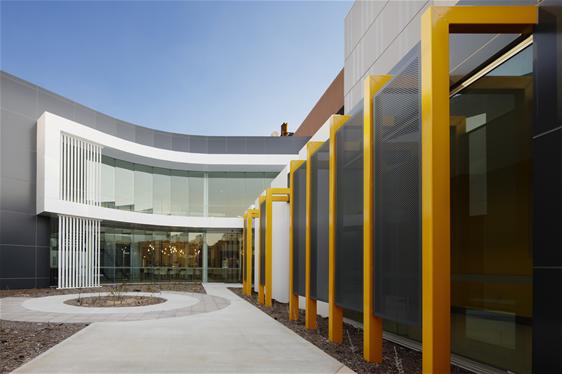
Rockingham Hospital, Western Australia
Rockingham Hospital is a district hospital serving the rapidly expanding population south of Perth. Inherent in the design of the high dependency, emergency short stay and medical units is the perception that patients’ ward rooms have a sense of individualism, with crafted views to the outside via the windows. Natural light fills the new ward and theatre block and large openings to the operating theatre level provide staff with views out to natural bushland. The architecture of the new mental health inpatient unit references modern domestic buildings, focusing on familiar materials, access to natural light and open space, as well as providing both stimulating and calming spaces, as required, for therapy.
Contract form: Managing contractor
Project completion date: Phase 1: September 2008;
Phase 2: September 2009; Phase 3: November 2010
Cost: AUD$116m
Area: 32,500sqm
Client: State Government of Western Australia
Architects: Hames Sharley and Silver Thomas Hanley
|
In New South Wales (NSW), according to Anthony Manning from Health Infrastructure, part of the NSW Health, projects fall into two camps: the creation of additional capacity and growth, centring principally around the development of cancer centres, and the replacement and/or reconfiguration of existing assets.
The way the department approaches the procurement and development of health assets is also undergoing a major rethink. “We are trying to focus on how to consult and increase transparency about what we want,” Manning says. “It used to be just about the lowest price, so designers often opted out. Now it is about value for money and smart design.
“We have done some work around creating a standard, ‘systematised’ design – a model that has some flexibility in it for both acute and non-acute facilities. This ‘shell-and-core’ approach will allow us to standardise certain features across facilities and to get on site earlier.”
Another change in NSW is the replacement, in January 2011, of the eight area health boards by 17 local health networks which Manning says will become more active players in projects. The move is part of the national agreement for health reform which includes the establishment of local hospital networks throughout the country.
Dr Paul Barach is working with Manning and Health Infrastructure CEO Robert Rust to help achieve their vision, with a particular focus on creating and assessing value in health facilities design. “We want to create a process that allows meaningful feedback, knowledge and learning,” Barach says. “This includes not only engaging staff and users but also the local community. Indeed, outcome improvements in facility design and meaningful cost reductions are unachievable without active cooperation and acceptance of shared goals among all stakeholders.”
“We are hoping to have a number of ‘super user groups’ together soon to discuss best evidence, process and
optimal engagement of clinicians, etc,” Barach adds. “They would become a regular user group and sounding board. It is
something that does not exist right now.”
The state has felt the repercussions of inadequate consultation with previous facilities, most recently with the development of Sydney’s Royal North Shore Hospital. In 2009 the plans were reviewed after staff complained that 16 of the 18 operating theatres would be too small for complex surgery. Recent plans to sell off some of the public land around the site has also come under criticism and, according to a report in the Sydney Morning Herald, “would leave the hospital, which has about 640 beds, with much less land than inner city hospitals such as Royal Prince Alfred and ignore the role open space plays in patient recovery”.
However, Barach is optimistic about the innovative changes that are proposed for the consultation and procurement processes in NSW and commends Manning and Rust on what they are trying to achieve.
|
Calvary Mater Hospital Newcastle, NSW
The first public-private partnership (PPP) project between the NSW health administration and the NovaCare Consortium, the redevelopment of the Mater Hospital in Newcastle included three new 30-bed wards – for oncology, medical and surgical inpatients – a new emergency department, the expansion of the radiation oncology department, the haematology unit and the drug and alcohol toxicology and enabling unit, and the construction of a new 100-bed acute adult mental health facility. A major challenge was that the AUD$180m project had to fit on a restricted city site, at the back of which was a heritage-listed convent.
Contract form: PPP
Project completion date: Officially opened August 2009
Cost: AUD$180m
Client: NovaCare Consortium
Architects: Suters, in association with PTW
Structural/civil: Robert Bird Group
Landscape architecture: John Lock and Associates
Mechanical/electrical: Basset Consulting Engineers |
Public-private partnerships
As health planning adviser at Plenary Group, Jenny Richter works with consortia bidding for public-private partnership (PPP) projects. Richter says the use of PPP varies from state to state and is limited by the number of projects large enough to warrant PPP funding. The next major PPP for Victoria will be the Victorian Comprehensive Cancer Centre in Melbourne. The new facility is part of the government’s strategy to increase the five year survival rate for cancer by accelerating new discoveries and treatments for cancer. The centre will bring together a number of key institutions to create a purpose-built cancer centre that combines patient care, research and education. Bids were submitted prior to Christmas and are currently being evaluated.
While Victoria and NSW have used PPP for a number of projects, resource-rich states such as Queensland and Western Australia have in the past opted for more traditional routes.
However, a call for expressions of interest for the long-delayed Sunshine Coast Hospital in Queensland is expected to be issued in early to mid-2011 – the first in that state to be funded in this way. And in Western Australia, the upcoming redevelopment of Midland Hospital is currently being funded through a PPP process – it will also have its services managed by a private operator/partner.
As in other states, in Western Australia the focus is on the improvement of regional hospitals, mental health and cancer services and the expansion of healthcare services in the capital Perth. This includes the AUD$1.76bn development of Fiona Stanley Hospital, financed through state funding, which is currently under construction. The 643-bed tertiary teaching hospital, which is being designed by the Fiona Stanley Hospital Design Collaboration (comprising architectural firms Hassell, Hames Sharley and Silver Thomas Hanley), will have 83% single rooms and includes a 140-bed rehabilitation unit.
|
| Western Australian Institute for Medical Research designed by Hames Sharley |
Also being constructed on the site is the AUD$65m WA Medical Research Institute, designed by Hames Sharley. The Institute comprises both wet and dry labs and has been designed to be sustainable with in-built flexibility for future needs.
“We have received feedback that we are addressing the Institute’s aim to meet the latest trends in the field,” says Warren Kerr, national director of health projects for Hames Sharley. “There is also area for future expansion.” Hames Sharley and Silver Thomas Hanley also worked on the expansion of Rockingham Hospital, which serves a rapidly growing population on the coast south of Perth (see case study). Expanding from 60 to 237 beds, the redevelopment of the hospital also includes a 30-bed mental health unit, part of the national strategy to provide mental health services closer to where people live.
In December 2010, the South Australian government announced the preferred bidders for the state’s first PPP project, the AUD$1.7bn Royal Adelaide Hospital. The team includes architects Silver Thomas Hanley, DesignInc, Leighton Contractors, Hansen Yuncken, Macquarie Capital Group and Spotless.
Arup acted as project management adviser for the Royal Adelaide and, according to Katie Wood, the project provides a good model for planning. “They did the healthcare plan for the state first, to ensure the hospital fits in with the plan and brings with it health reform. They had a vision and they held onto that vision, writing true output specifications for the
project and holding onto their idea for 100% single rooms.” Financial close for the project is expected to be reached in the first quarter of this year.
Addressing chronic disease
Arup has also worked closely with the Office of Aboriginal and Torres Strait Islanders (OATSIH) on the development of healthcare facilities that meet the needs of aboriginals and Torres Strait Islanders – a segment of the population that is disproportionately affected by chronic diseases such as cardiovascular disease, diabetes, cancer, chronic respiratory disease and chronic kidney disease. OATSIH’s ‘Closing the Gap’ Western Australian Institute for Medical Research designed by Hames Sharley strategy aims to combat the level of chronic disease through supporting healthier lifestyle initiatives and improving the delivery of healthcare to the indigenous community.
Addressing these issues has also been a focus of some of the work taken on by NSW-based Suters Architects. Suters designed, as part of a pro bono project in collaboration with Architecture without Frontiers, a dialysis clinic for the remote township of Kintore, which lies about 530km west of Alice Springs and has a population of around 450 people, 96% of whom are aboriginal or Torres Strait Islanders. The building, which was previously used as an aged care facility, was redeveloped into a dialysis unit with the capacity to dialyse up to eight patients a day. It also includes an accommodation unit for out-of-town patients, as well as a health education resource area to “help locals learn about their bodies and their health in culturally appropriate ways”.
Suters also worked on the redevelopment of the emergency department (ED) at the Alice Springs Hospital, where approximately 80% of the patients seeking treatment are indigenous. To help reflect their cultural beliefs and practices, a combined entry forecourt and gathering space was incorporated into the design. The two-storey, 1,731sqm ED also includes 35 treatment spaces and associated facilities and provides a “dramatic focus” to the hospital.
The firm has also worked on a range of regional hospitals and community health centres on the eastern seaboard, of Australia, including the recently completed Calvary Mater Hospital in Newcastle (see case study) which it designed in collaboration with PTW and which, in November, received the Hunter Development Corporation Large-Scale Development Award (Commercial/Industrial) at the Lower Hunter Urban Design Awards.
|
Robina Hospital, Brisbane, Queensland
The AUD$274.3m redevelopment of the Robina Hospital will enable the hospital to provide general medical and specialist surgical procedures for the local population, complementing the services provided by the nearby Gold Coast University Hospital, which is also under construction. The first phase, a new main entry, ward building, outpatients department, CSD and theatres, was completed in December 2010. “We tried to build on its presence on the Gold Coast providing vistas of the mountains on one side and the sea on the other from every part of the hospital,” says architect Mark Grimmer. The rooms have large double-glazed windows with sunshades to keep the heat out in summer while enabling light to enter the rooms. Staff bases also have views out. “We wanted to create a place where staff want to work,” he adds. Access to natural light has also been incorporated into operating theatres, recovery and CSD – and large photographs of the beach and/or rainforest have been applied to the walls to create a further sense of the outdoors.
Contract form: Managing contractor
Project completion date: mid-2012
Cost: AUD$274.3m
Client: Queensland Health
Architect: BVN Architecture |
Development has also been very active in Queensland and BVN Architecture has been involved in a number of major projects in the state, including the redevelopment of the Robina Hospital (see case study). The hospital will complement the larger Gold Coast University Hospital, which is also currently under construction, providing a range of services to the local population. BVN Architecture also designed the Robina Health Precinct, a five-storey community health facility which will provide multidisciplinary outpatient health services and education. The Robina Health Precinct will be constructed adjacent to Robina Hospital and construction will commence in February 2011.
“The health precinct has more of a community feel,” says architect Mark Grimmer from BVN. Terracotta was chosen for the façade to create a sense of warmth – a “welcoming community service”. Articulations within the façade provide spaces for extra seating in the public corridors at each level as well as creating a lively, communal space for those who use it. The terracotta cladding of the health precinct both complements and contrasts with the colours used on the hospital next door, reflecting the distinctive but complementary roles fulfilled by the two facilities in meeting the healthcare needs of the local community.
BVN recently won the top award for the health category at the 2010 World Architecture Awards in Barcelona for its design of the Brain and Mind Research Institute (BMRI) Youth Mental Health Building at the University of Sydney.
DesignInc is currently working on a new renal unit at Shellharbour Hospital, about 100km south of Sydney on the NSW coast. Because the unit sits near a morgue, DesignInc has commissioned a mural for one of the walls – a ‘spirit painting’, a request from aboriginal representatives to enable the facility’s aboriginal patients to enter the building. “We have also provided a lot of outside space and used a lot of earth colours – greens, blues, browns and beige – colours that are familiar to those who will use the space,” Forbes says. “We have tried to make it bright and cheerful – a good place to wait.”
|
|
Chatswood Community Centre,
designed by DesignInc
|
The firm also recently finished working on a community health centre in Chatswood, a suburb of Sydney. The centre has been designed as an indoor/outdoor centre using colourbond metal and natural stone, “characteristic of the natural environment”, Forbes explains. Primarily a GP clinic, the facility also includes mental health and child development services and is part of a strategy to bring primary care services together with allied health services. The federal government had hoped to see the establishment of 32 GP superclinics around the country, with a particular focus on rural centres, for which it would provide the capital. However, Forbes says, the initiative has not been taken up as quickly as the government had hoped and few have been taken up so far – although he is confident that the target will eventually be reached.
“There have also been some interesting experiments along the same lines in New Zealand, where nurse practitioners do a lot of what a GP does,” Forbes comments. Economic constraints While the economy continues to boom in Australia, in New Zealand it is a different story. The financial crisis has had a significant impact, including reducing the amount of capital available for health infrastructure. The government has responded by looking for ways to improve efficiency in the healthcare sector. As part of this, in December 2010, the National Health Board issued guidelines for the assessment, prioritisation and sequencing of capital investment proposals by district health boards (DHBs).
Braemar Hospital, Hamilton, New Zealand
The redevelopment of Braemar Hospital in Hamilton saw the private facility move to a site adjacent to Waikato Hospital, which is also under redevelopment. Architects Chow Hill worked closely with ophthalmologists and other staff to create a design that would attract both surgeons and patients, providing state-of-the-art facilities and a hotel-like feel to the 100% single-room hospital.
Project completion date: April 2010
Cost: NZ$26.5m
Area: 7,800sqm
Client:Braemar Hospital
Architect / Project Manager: Chow Hill
Main contractor: Mainzeal Construction
Structural engineer: Holmes Consulting Grou |
|
“Investment proposals need to be driven by future service requirements and put much greater emphasis on national and regional priorities,” said National Health Board chair Dr Murray Horn, when the guidelines were launched. “The configuration and mix of facilities, information systems and workforce investments also need to support changes in models of care that are necessary to lift health sector performance within the resources available.”
The first project scheduled to be developed under the new rules will be the NZ$400m redevelopment of Christchurch Hospital on the South Island, says Darryl Carey from Chow Hill Architects which, in association with Thinc Health, drew up the revised masterplan for the 50,000sqm hospital. The redevelopment, strongly influenced by the need for existing buildings to meet the country’s stringent seismic standards, will include three levels of medical-surgical 96 beds,
12 operating theatres and a new emergency department.
Carey says the government is likely to be encouraging a new way of funding healthcare infrastructure projects, along the lines of PPP. It will be the first time this type of investment will be used in the healthcare sector. It is also likely that some district health boards will merge. There are currently 20 DHBs in the country, serving a population of just under 4.4m people.
While the economy may delay a number of new projects going ahead, Carey says “every hospital in the country has some long-awaited redevelopment work planned”. This includes the redevelopment of Waikato Hospital, designed by Chow Hill, Jasmax and MSJ Architects, which is due to complete in 2013; the ongoing redevelopment of Middlemore Hospital in Auckland, led by Klein Architects; a new inpatient building for Rotorua Hospital, topped off in September 2010; and the redevelopment of Taranaki Base Hospital which has been tendered and is awaiting final approval from the Minister.
So, while purse strings may be tight, healthcare remains a priority and in both Australia and New Zealand strategies are in place to improve the way it is delivered.
Kathleen Armstrong is a healthcare writer
|

1.1.jpg)



|