Africa: Beautiful Africa
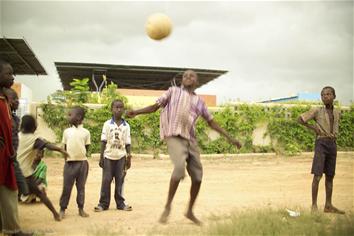 |
| Children playing outside the CBF (Centre pour le Bien-etre des Femmes) Women's Health Centre in Burkina Faso (Photo - Cariddi Nardulli) |
In his introduction to our special report on Africa, Mike Nightingale calls for the effective use of international expertise in developing local solutions to address this remarkable continent’s health issues.
In many ways, 2009 is set to present a frightening and extremely challenging time for the world. Comfortable economic assumptions in the developed world have been turned on their head, making vital investment in the emerging economies even more challenging than before the current economic crisis.
Africa, despite its vast natural resources, contains the largest number of poorest nations of any continent. It faces enormous challenges of providing clean water and adequate food supplies; on top of this, HIV/AIDS and drug-resistant TB are just two of the deadliest medical scourges facing young nations often also striving for political stability.
Overarching this is the sceptre of accelerating global warming threatening dwindling fresh water supplies and pushing up fuel costs. The promise of billions of aid for Africa has not yet been delivered by rich countries, and is now even less likely to develop into a sustainable lifeline following the credit crunch.
However, it is not all doom and gloom. This month will see the inauguration of America’s first black president, with direct African roots. Also, focused philanthropy, for example, from the Gates Foundation, is making real progress against malaria, TB, and HIV/AIDS.
There are clear signs, all over Africa, that the continent’s uniquely resilient and resourceful people are determined to rise above their problems and benefit from raised living standards, better life expectancy and attain security for future generations.
South Africa has demonstrated, since the release of Nelson Mandela from prison in 1994, the huge potential of an African country held back by political dogma for 40 years. It has delivered 5% annual economic growth, year on year, since 1996, and its enormous advantages of ingenious people, rich natural resources and, above all, youthful ambition, can be applied to most parts of Africa.
Now, more than ever before, we are an interdependent global economy; healthcare solutions in Africa are directly relevant to all of us, not just for humanitarian reasons, but to sustain the planet. The case studies in this issue have been selected to demonstrate the importance of long-term social, economic and environmental sustainability and to highlight how international expertise has been effectively used to produce successful local solutions.
A worldwide need is emerging, of community-driven healthcare, fully integrated with education, housing and employment. Local partnerships between public and private enterprises can create sustainable, mixed-use facilities designed to respond flexibly to local needs. The dramatic advantage developing countries have at this point in our technical evolution is that they can make full use of the telecommunications revolution, and its falling costs, to build appropriate low-tech local health facilities linked to specialist facilities anywhere in the world.
Design & Health is keen to stimulate dialogue between all parts of the world health network and harness global expertise to improve healthcare facilities in the developing countries. We impeach you to enjoy this African report, learn something new about this remarkable continent and help us in this endeavour.

Mike Nightingale is the founder of Nightingale Associates
|

1.1.jpg)





|