Africa: Age of Engagement
Partnerships – from governments pairing up with private investors, to a more participatory approach to healthcare design – are emerging as a key theme in African healthcare. Emily Brooks explores what this new sense of shared responsibility might bring.
Rapid economic growth – real and predicted – means more investment than ever before in Africa’s people, resources and infrastructure; and yet its health issues could threaten to derail the optimism and entrepreneurial spirit that defines the continent and are such a critical resource to the region.
Ideas about how Africa can release itself from poverty are being challenged, alongside a new appraisal of what the developed world can offer the world’s poorest countries, and what it might gain in return. In his recent book1, former chief executive of the NHS Lord Nigel Crisp asks us to question whether the UK’s healthcare system, burdened with 50 years of NHS bureaucracy, is as worth exporting as we like to think. He urges us to look more closely at those countries where there is less reliance on large hospitals – and an amazing resourcefulness borne of necessity – because they have much to teach. “Unconstrained b your history, they train people differently, create new sorts of organisations, involve families and communities and concentrate more on promoting health rather than on just tackling disease,” wrote Lord Crisp in The Times last year2.“They don’t have our resources, or our baggage.”
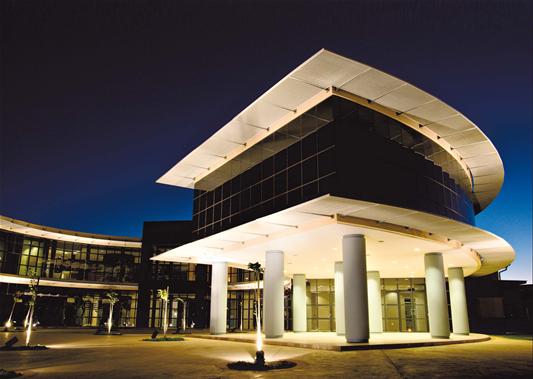 |
Vryburg Hospital, Vryburg, Northwest Province, South Africa
Completion date: 2009; Beds: 120
Client: Department of Public Works, Roads & Transport; Department of Health; Contract value (main hospital) R274,000,000
Architect: Bartsch Consult
Health planners: Leap Specialist Strategic & Planning Solutions
The overall plan of the hospital allows for an easily accessible main entry to the hospital administration, training areas and information and visitor facilities. This leads directly into the main hospital street allowing visitors easy access to the wards but bypassing all the main hospital departments.All the wards can be extended to increase bed numbers without disrupting the daily operations and without increasing walking distances to each ward. A series of internal courtyards introduce natural light and ventilation, but also add a softer, more human scale.
|
Architect Dr Innocent Okpanum of Ngonyama Okpanum & Associates touches on this in a recent paper3 that calls for the reform of South Africa’s design guidelines for accident and emergency facilities, unchanged since before the first democratic elections in 1994. He paints a picture of public hospitals as “frightening and unfamiliar... alienation, fear, hopelessness, loneliness, and dehumanisation often overwhelm patients”, yet also points out that traditional African medical treatment approaches, with their emphasis on human interaction and access to family and friends, are similar to the holistic, patient-centred approach that many healthcare architects now take.
Both Okpanum and Lord Crisp are keynote speakers at this March’s Design & Health international symposium in Cape Town, an opportunity to make real the partnership and communication that is seen as vital to progress on healthcare. It comes at a pivotal time for South Africa, which starts to roll out its own national health insurance plan next year: in support of this, the Department of Health is upgrading its five largest public hospitals with a multi-billion rand investment.
A recent McKinsey Global Institute report4 sees great opportunities for companies investing in Africa’s infrastructure – a huge unmet need for healthcare services combined with a fast-growing economy means that demand falls desperately short of supply. People’s spending on healthcare is expected to rise by 4.2% a year between now and 2020.
There is a tendency to see Africa as a whole instead of its distinct component countries, or to assume that what happens in South Africa is shorthand for activities elsewhere. “What I’ve picked up on is that not every country wants to take its lead from South Africa,” says Chris Sherwood, director of international development for Nightingale Associates, which has had a Cape Town office since 2004. “Take Uganda – torn apart by civil strife, until recently there’s been very little investment in infrastructure. Now, investment is starting to flow, but there are few consultants with experience of very large infrastructure projects – they may be very good architects and engineers, but they just haven’t got the same level of experience that South African firms do. But there’s that little bit of resistance in handing over those projects.”
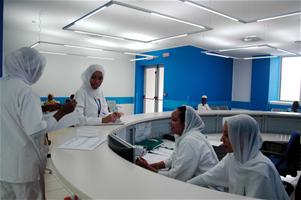 |
Salam Cardiac Surgery Centre, Soba, Khartoum, Sudan
Project completion date: 2007; Client: Emergency, an Italian NGO
Built area: 6,000sqm; Total site area: 41,000sqm
Architect: Studio tamassociati
Italian NGO Emergency (www.emergency.it) has been working in Sudan since 2004, and in 2007 opened a free cardiac hospital on the banks on the Nile, about 20 miles from Khartoum, to serve Sudan and nine neighbouring countries – an area the size of Western Europe. It approached Italian architectural practice tamassociati to design the hospital. tamassociati’s design is a series of buildings around a peaceful courtyard, intended to inspire feelings of safety and respite. Materials are modest and in keeping with local building styles, such as the handmade woven screens that shade public walkways. The building is naturally insulated, ventilated and cooled. |
Nightingale Associates currently has two South African hospital builds on site, but Sherwood admits that other projects have been slow to progress, despite successful tenders and bids.“We’ve been really successful with getting into consortia as architects, but when the jobs don’t go ahead, it really affects us,” he says.
Despite a suspicion that the South African government may be publicly supportive of public-private partnership (PPP) funding, but privately wary of it, a few such projects are coming to fruition: Netcare, the largest private hospital group in South Africa, has just delivered an upgrade to the Eastern Cape’s Settlers Hospital in Grahamstown in conjunction with the local department of health. It is also leading the consortium for a major new public hospital for Lesotho, due to be finished this autumn.
The hospital it replaces, Queen Elizabeth II, is typical of many, suffering from a chronic lack of resources (heat, hot water, medical supplies, medicine and trained staff) and serving the needs of a poverty-stricken population, more than half of which live on less than US$1 a day. Design priorities, here and elsewhere, relate to the need just to bring facilities up to modern standards; the need to cater for large amounts of infectious patients (with TB or AIDS-related infectious diseases) is another driver that distinguishes hospital design in Africa from elsewhere. Chris Sherwood expects other African countries to follow suit with PPP “because it works – it delivers infrastructure projects when other methods can’t.”
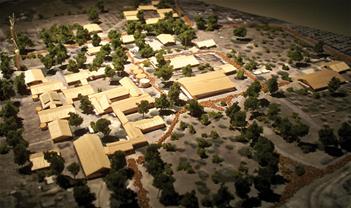 |
Songambele Hospital, Tanzania
Cost: US$500,000
Client: Roads to Life Tanzania
Roads to Life Tanzania operates in the district of Bariadi in the north of the country, under the care of the Reverend Paul E Fagan, a missionary who has worked here for some 50 years. The organisation’s on-site clinic/dispensary was recently given government permission to upgrade its facilities to a formal health centre, so patients will no longer have to go to the district hospital for treatments such as minor operations and blood transfusions. Students from Texas A&M University’s College of Architecture created design concepts for the upgraded facilities: the brief required adding operating wards, x-ray and ultrasound buildings, admin buildings and staff housing. |
Investors target the growing middle classes in urban areas because that’s where the returns are, but governments are also focusing on expanding rural services by building smaller clinics that fall somewhere between community health centres and small hospitals, putting some acute facilities within reasonable reach for the first time. Tanzania’s Songambele Hospital, recently re-imagined by students from Texas A&M University (see case study), is typical of this trend.
Aid agencies, charities and other NGOs still provide significant support in rural areas, and they are devising some imaginative healthcare buildings that are socially responsible and give due attention to sustainable measures such as solar power and natural cooling systems not least because there is no other option. “This isn’t a big flashy hospital that’s a massive silo of energy that no one can afford to go to,” says Texas A&M University’s Professor George Mann about the Songambele Hospital project. “This is back to basics. It focuses on primary need.”
_new1.jpg) |
Free State Psychiatric Complex, Bloemfontein, Free State, South Africa
Completion date: end of 2013
Client: Provincial Department of Health, Free State Province
Architect: LEAPcc Architects Structural
Engineers: Phethogo Consulting
Landscape Architects: Greeninc
The Free State Psychiatric Hospital currently consists of a range of buildings dating back to the early 1900s, some of which are to be upgraded, others replaced. New buildings are provided for a chronic ward, adolescent ward, acute wards, forensic wards, sheltered workshops and therapies, a pharmacy, halfway houses and training facilities. The main design approach has been to consolidate the site by cutting off the activities not belonging to the psychiatric complex and to provide a new face to the complex, by changing the entrance to the southern side of the site so that it gives easy access to Kosmos (mentally handicapped), outpatients and administration.Therapies and communal facilities have been zoned centrally for easy access by all the different groups. Given that this is a mental health facility, it is particularly important for patients to feel a sense of safety and wellbeing. |
Raul Pantaleo of Italy’s tamassociati has worked on several hospitals for the charity Emergency, including Sudan’s Salam Cardiac Surgery Centre (see case study). He was chosen by Emergency not for his knowledge of healthcare buildings but for his specialism in participatory project planning, and this democratic approach has proved key to working successfully in extremely depleted areas. “The project is not just about the architect and the engineer, but the nurses, the local staff manager, the builder – the idea is that every person can have equal input into the process, and the architect is somehow like the conductor in the orchestra,” he says. “When people see that you’re just working honestly, working for them, their attitude changes completely.”
There is, of course, plenty of homegrown talent that is just as committed to this holistic approach – the idea that hospitals can instil a sense of civic pride, and that they are a powerful expression of trust, is exactly what architects like Okpanum strive for. But there is a sense that governments must catch up with these ideas and put quality environments on an equal footing with ser vices deliver y. In the race to capitalise on Africa’s economic potential, and the need to provide basic healthcare for all, this human dimension shouldn’t be allowed to fall away.
Emily Brooks is an architectural writer
References
1. Crisp N. Turning the World Upside Down: the Search for Global Health in the 21st Century. London: Hodder Education; 2010.
2. Crisp N. Is This the Future for Britain’s Health Ser vice? The Times; 6 January 2010.
3. Okpanum I. The Role of Design Guidelines for Accident and Emergency Facilities (DGAEF) in South Africa; unpublished paper.
4. McKinsey Global Institute. Lions on the Move: the Progress and Potential of African Economies. June 2010. Accessed at: http://www.mckinsey.com/mgi/publications/progress_ and_potential_of_african_economies/index.asp.
|

1.1.jpg)



|