A Sense Of Place
_new1.jpg) Richard Mazuch describes how the ground breaking hPod project could soon lead to the creation of the optimum healing environment. Richard Mazuch describes how the ground breaking hPod project could soon lead to the creation of the optimum healing environment.
Over the last 10 years, researchers in both universities and industry have been exploring the expanse of international research into optimum healing environments from Japan to Scandinavia, the US and even NASA.
At the same time, rapid advances in technology have been harnessed to support an increasingly persuasive evidence base that in itself supports the development of optimum healing environments specific to varied illnesses and age groups.
Studies clearly show that certain elements – lighting, colour, aroma, views, art, modulation of space and form, manipulation of scale, proportion and rhythm, sound, texture and materials, ease and flow of movement through space and time, indoor and outdoor plantscaping – can have a powerful healing and therapeutic benefit on patients.
Essentially the environment is perceived through the main sensory receptors. According to recent research, there are a minimum of 21 senses. Understanding the true dimensions and limitations of the sensory receptors not only increases the skill of the designer but also enables the creation of a truly responsive environment.
The hPod Project will fine-tune and choreograph research, new technology and products to deliver optimum healing environments for patients, using purposed-developed tools including an emotional mapping design tool, which enables design teams to create truly de-stressing, healing, patient-focused and therapeutic environments. Predominant emotions are identified as colours on plans in each and every space of the individual patient groups. Clinicians and designers can navigate through the emotions, feelings, sentiments and sensations of patients with more skill and sensitivity, within varied healthcare environments.
In addition, Nightingale Associates is systematically developing ‘prescription spreadsheets’ to help define precise and optimum conditions for healing processes within individual departments, single rooms, and specific to individual patients and their relative illnesses.
With the ‘design prescription’, it is envisaged that smart cards, used to access single rooms, will link to building management systems which will deliver optimum healing environments to individual patients – attenuating light intensity, colour and temperature.
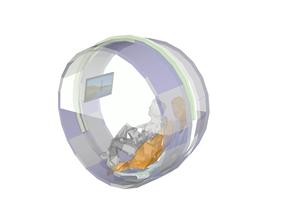 Interdisciplinary approach Interdisciplinary approach
The project, which commenced in December 2006, has been backed by a strong team of engineers, university researchers and product designers, architects, interior designers, furniture designers, clinicians, patients, contractors – and bespoke manufacturers.
In total, 16 healing pods are being developed, each delivering optimum healing environments to specific patient groups – neonatal; labour; breastfeeding; MRI/CAT; cardiac; burns unit/palliative care; SAD (seasonal affective disorder); bipolar depression; headache; dementia; oncology; chemotherapy; phlebotomy; intensive therapy; energising; and calming. The neonate pod will deliver an optimum neonatal intensive care unit environment, based on extensive research from the US, which shows that this environment needs to mimic that of a uterus or womb in terms of temperature, light and other key elements.
For breastfeeding, paediatricians in neonatal intensive care units (NICUs) and special care baby units (SCBUs) in France and Belgium encourage mothers to wear orange jumpers which help them to lactate. Inga Warren from the Winnicott Baby Unit at St Mary’s Hospital in London has also discovered that pre-term babies and neonates feed more readily when exposed to the smell of vanilla. Seasonal affective disorder lamps produced by Philips have also been developed in the design of the SAD pod to alleviate winter depression which can cause lethargy, sleep problems, anxiety and overeating.
The calming pod will deliver images of woodland and landscapes scenes, which have been shown to lower respiration rates, blood pressure and heart rates within three minutes. Ambient colour, temperature and sounds will be key to the choreography of this space. In the burns pod, we hope to demonstrate how burns victims can obtain extraordinary relief from pain by entering a virtual-reality landscape full of soothing snowscapes, cool colours and reduced temperatures and smells emotive of cold climates.
It is envisaged that, eventually, the hPod will develop into individual spaces within a healthcare setting. So, from hPods to rooms to departments – ultimately it is hoped that a prototype hospital will be built using this data.
Richard Mazuch is research director at Nightingale Associates
|

1.1.jpg)





|